What is a digital twin? How can biomanufacturing be applied? What are the shortcomings?

Digital twin technology provides a solution for dynamic simulation, intelligent prediction, and optimized control of production processes by constructing a virtual mapping system of physical entities, integrating sensor data and multi-scale models in real-time.
The origin of digital twin technology can be traced back to the "mirror space model" proposed by Professor Grieves at the University of Michigan in 2005, which mainly emphasized the virtual real mapping in product lifecycle management.
In 2010, NASA first used the term "digital twin" in its "Technology Roadmap" for spacecraft health monitoring.
Afterwards, digital twin technology gradually expanded to the field of biomanufacturing, especially in the biological fermentation process, by integrating cell metabolism models and reactor flow field models, dynamic optimization of the fermentation process was achieved.
Its core features are virtual real synchronization, multi-scale modeling, and intelligent decision-making.
Real time data interaction between virtual models and physical entities, dynamic updating of states, and cross scale integration of micro cell metabolism, mesoscopic reactor flow fields, and macro process parameters, combined with artificial intelligence algorithms to achieve autonomous optimization of process parameters.
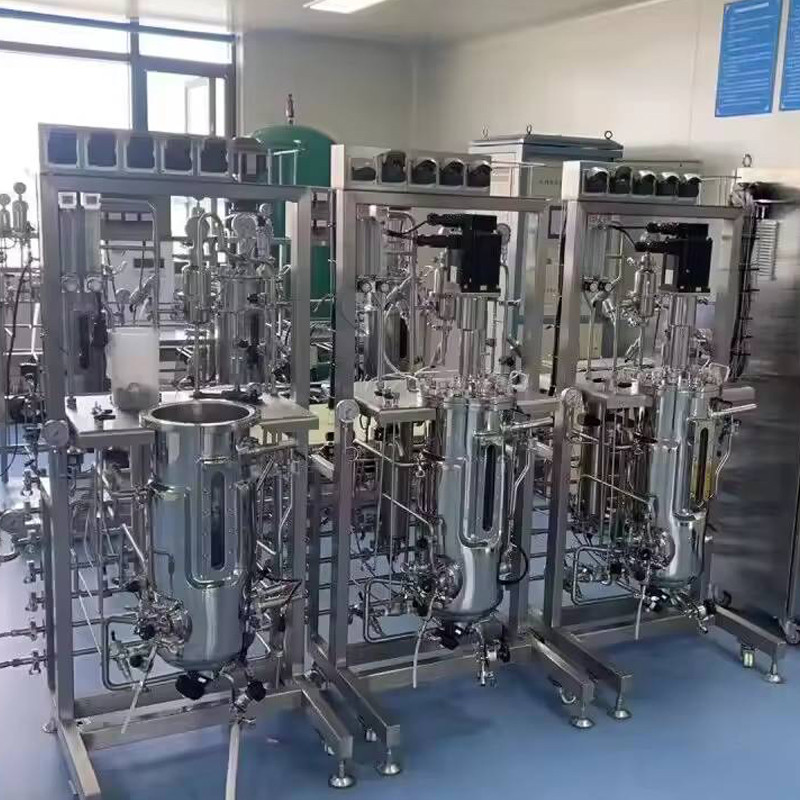
The implementation of digital twin technology relies on the collaborative work of multiple core components.
The real-time data acquisition system achieves bidirectional communication between physical entities and virtual models through sensor networks and SCADA/DCS systems.
The construction of multi-scale models includes biotic models and abiotic models. The former involves cellular metabolic network models and dynamic models, while the latter covers fluid dynamics models and heat transfer models.
Intelligent algorithm integration utilizes machine learning and optimization algorithms for model parameter calibration, soft sensor development, and searching for optimal operating parameters.
Compared with traditional simulation technology, digital twin technology has significant advantages in data sources, model updates, predictive capabilities, and control methods.
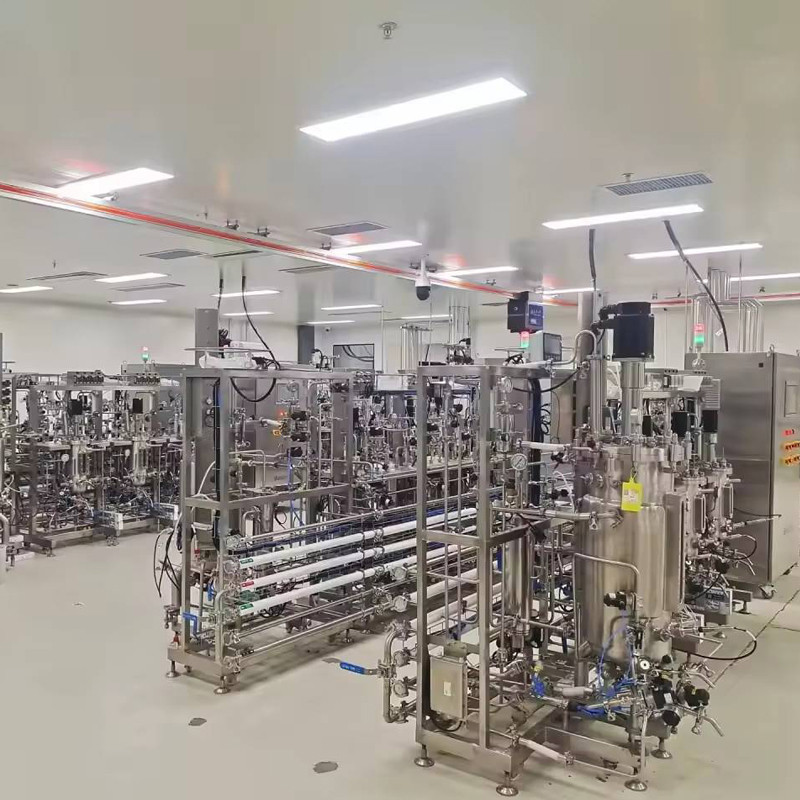
It not only utilizes real-time sensor data and historical data, but also achieves dynamic online updates, combines uncertainty analysis and AI prediction, and supports closed-loop automatic control.
In biomanufacturing, the application scenarios of digital twin technology are diverse and abundant.
In terms of fermentation process optimization, Tianjin Institute of Industrial Biotechnology, Chinese Academy of Sciences, successfully optimized the fermentation process of vitamin B12 by integrating real-time data such as OUR and CER through the digital twin model, and the output was increased to 280 mg/L.
It is also applied in fields such as rational amplification strategy, fault diagnosis and prediction, and process package development, reducing the number of physical experiments and shortening the process development cycle through virtual iterative optimization.
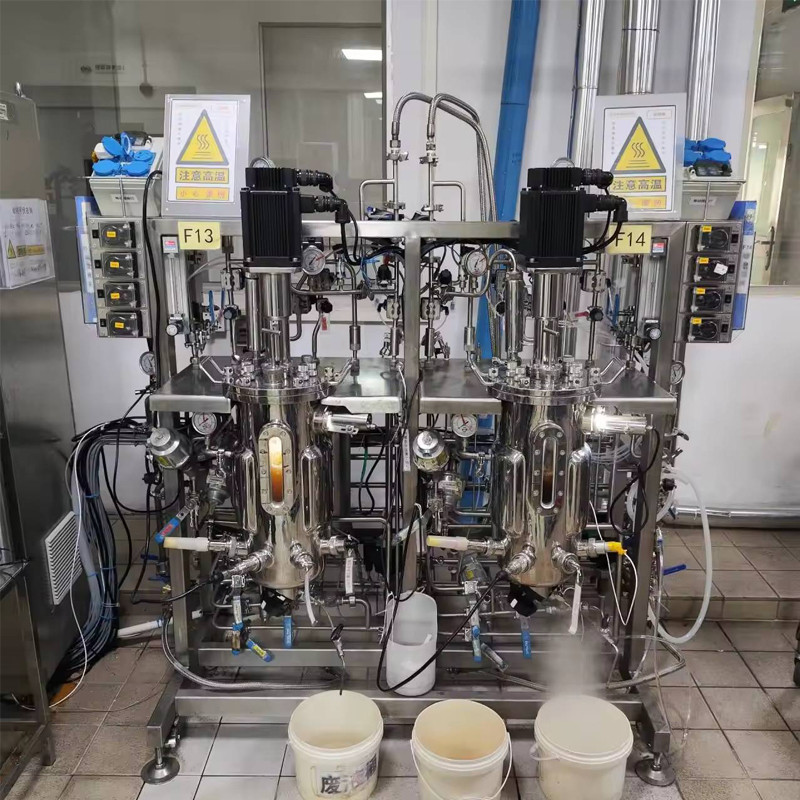
Digital twin technology shows great potential, but still faces some challenges such as model accuracy, data fusion, and computing resources.
Future development directions include model lightweight, edge computing and cross domain integration.
Through developing reduced order models, deploying intelligent algorithms on the bioreactor side, and combining digital twins and synthetic biology, an intelligent biological manufacturing system with "cell reactor" collaborative optimization can be realized.