The safety and effectiveness of biological products depend on the precise implementation of downstream purification processes.

Purification is the core link in the commercialization of microbial drugs, determining product quality and industrial production level.
1、 The core challenge of purification process
The fermentation broth has complex components, including microbial cells, metabolites, and unused culture medium.
The concentration of target active substances is extremely low, such as vitamin B12, which is only 0.02 kg/m ³, while the proportion of impurities is high and some of them have similar physical and chemical properties to the target.
Bioactive substances have poor stability and are prone to deactivation and decomposition under the influence of heat and chemical reagents, especially proteins whose activity depends on their spatial structure, which increases the difficulty of process control.
Some products require full aseptic operation, further raising the threshold for process implementation.
2、 Cost proportion and industry value
Downstream purification is a "high cost" for the production of biological products.
The proportion of post-treatment costs varies significantly among different products: the investment in purification in antibiotic production is about 4 times that of fermentation, 1.5 times that of organic acid and amino acid production, and the purification cost of genetic engineering drugs is as high as 60% to 90% of the total production cost.
Therefore, optimizing purification technology and reducing costs are key breakthroughs in promoting the development of the biopharmaceutical industry.
3、 Standardized downstream purification process flow
①. Pre treatment of fermentation broth
By adjusting the pH value, salt concentration, heating or flocculation, etc., the properties of the fermentation broth can be improved, laying the foundation for subsequent separation operations and reducing the processing pressure of subsequent processes.
②. Cell separation
By using techniques such as sedimentation, centrifugal separation, filtration, or cross flow filtration, microbial cells are separated from the fermentation broth. If the target substance is an extracellular product, it can directly enter the preliminary purification stage after this step.
③. Cell lysis (exclusive to intracellular products)
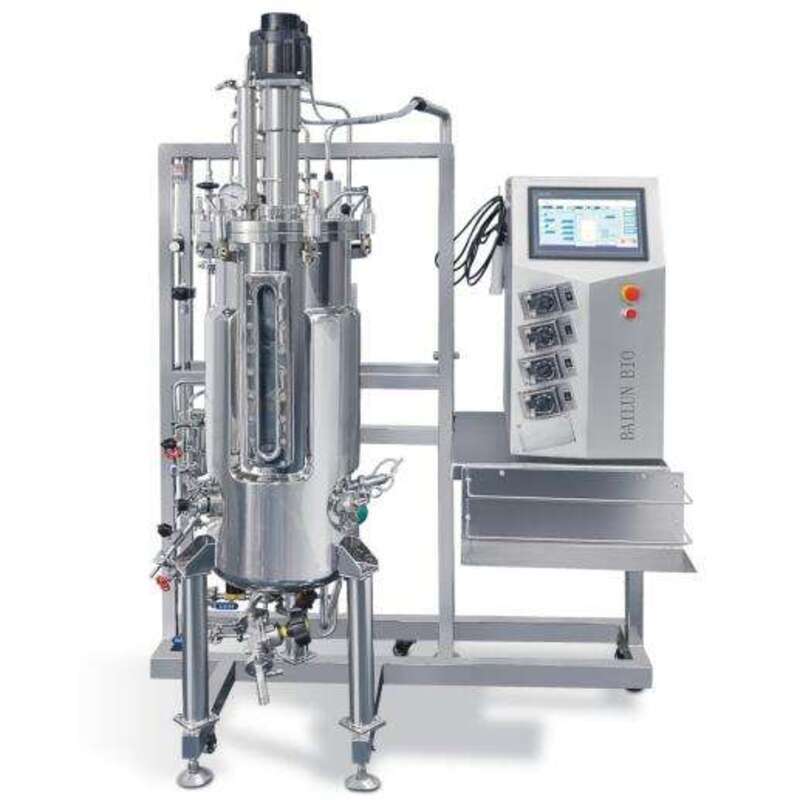
For intracellular active substances, it is necessary to break the cell structure and release the target product through homogenization, grinding, enzymatic dissolution, or ultrasonic wall breaking.
4. Cell fragment separation
Using techniques such as centrifugation, extraction, filtration, or cross flow filtration to remove debris generated after cell lysis, further purifying the feed solution.
5. Preliminary purification
Concentrate the target substance through methods such as precipitation, adsorption, extraction, or ultrafiltration, significantly reducing impurity content and reducing subsequent processing volume.
6. Highly purified
Precise separation technologies such as gel filtration chromatography, ion exchange chromatography and affinity chromatography are used to achieve high purity enrichment of target substances and ensure that products meet quality standards.
7. Finished product processing
After aseptic filtration, ultrafiltration, crystallization, freeze drying or spray drying and other processes, the purified substances are processed into final products to ensure product stability and ease of use.