
How to Choose the Right Benchtop Cell Culture Bioreactor? Size, Material, Features?
How can your lab get steady cell data and not waste space, media, or time? Bioreactors and fermenters are produced by Bailun Biotech (Jiangsu) Co., Ltd. Its team claims to have more than 25 years of experience in bacterial fermentation and cell growing. It learned one thing . A decent benchtop cell culture bioreactor matches your cells, your aim, and your bench. This guide has five easy checks. Look at your cells, vessel size, how many vessels, what the vessel is formed of, and the controls. Then we talk about growing to a larger scale and how to choose a provider. A benchtop cell culture bioreactor is a compact vessel system for use on your bench top. It regulates temperature, agitation, pH, dissolved oxygen (DO), antifoam and feeds. In steady conditions, your cells grow. “The data is also kept in the system. So every run is straightforward to replicate and compare. A shake flask has no control loop. A benchtop bioreactor system checks its sensors and fixes the culture when needed. It also saves live data. Bailun's benchtop cell culture bioreactor range works this way. The company builds units from 0.1 L to 1000 KL. So you can grow your work with one supplier. Your cells should be where you start. Cells of plants, bacteria, fungus, yeast, and algae have distinct oxygen and mixing requirements. So learn your cell type first. Then choose your hardware. Animal vaccines: avian influenza, rabies, foot and mouth disease Human vaccines: hepatitis B, tetanus Proteins, enzymes, and antibiotics Your goal matters too. numerous tiny vessels to test numerous situations. One large vessel holds all the instruments for process activity. Check any laboratory cell culture bioreactor against your goal first. Select the vessel size based on working volume, not total volume. Working volume is the volume of liquid your culture takes up. Use that number to determine the size of your benchtop cell culture bioreactor. Bailun's mini bioreactor has glass vessels of 0.2 to 2.5 L. The load rate is 30% to 75%. You can customize the volume. The glass vessel spec tables show every detail. The single glass option is 1 to 10 L. It is made of borosilicate glass. Its load rate is 30% to 70%. Stainless systems start at 5 L. They also have a 30% to 70% working volume. Option Volume Load rate Material Stirring A parallel bioreactor runs many vessels at the same time. All vessels have the same conditions. So it is easy to compare the results. Use a cell culture parallel multiple bioreactor when you want to test many media, feeds, or setpoints in one run. Bailun's multi-vessel units set parameters together. They also start, stop, calibrate sensors, and sterilise media together. Read how parallel systems work to learn more. The Bailun benchtop multiple bioreactor can run 2 to 108 vessels at the same time. Its built-in design saves bench space. Each vessel has its own sensor. Each vessel also has four peristaltic pumps. They are listed as standard 4×n pumps. So you can control every vessel on its own. Glass is good for small vessels. You can see your culture through it. You can also clean it in an autoclave. The MINI system uses glass. The 1 to 10 L option uses borosilicate glass. Stainless steel is better for bigger jobs. Bailun's stainless steel mammalian bioreactor page lists a 316L inner vessel and a 304 jacket. Tank design pressure is 0.3 MPa. Jacket design pressure is 0.35 MPa. Polishing is 0.4 to 0.6 µm. The diameter-to-height ratio is 1:2.2 to 2.5. Steel also lets you do sterilization in place (SIP) and clean in place (CIP) by spray ball. The MINI system runs on a Siemens PLC. Bailun says it is mature and stable. A 15-inch LCD touch screen shows the data. You can link it to an upper computer. A USB port lets you copy data right away. Control modes are manual, automatic, sequence, and related. Temperature uses semiconductor anhydrous control. The stainless cell culture bioreactor system gives firm numbers. Its pH range is 2.00 to 12.00 (±0.1). DO runs from 0 to 150% (±3%). Display precision is 0.1%. DO is coupled with agitation and oxygen. Sensors come from Hamilton or Mettler. The 10-inch or 15-inch touch screen saves and sends out data. The screen has RU, EN, and CN languages. The Siemens PLC cell culture bioreactor page has the full list. Mass flow meter and O2/N2/CO2 gas supply CO2 exhaust analysis Level, turbidity (OD), and ORP sensors Weight system and live cell (biomass) sensor Remote control The MINI system comes with mechanical stirring. Magnetic stirring is optional. The 1 to 10 L glass option uses magnetic stirring. Steel models have a mechanical drive on the top or bottom. They also have a magnetic drive on the top. MINI comes with one air intake. You can add more if you want. The 1 to 10 L glass option has four. A rotor flowmeter (manual) comes as standard. A mass flowmeter (automatic) is optional. Steel models list air flow of 1 vvm. You can choose 2 vvm as an option. You clean glass vessels in an autoclave. Steel vessels use SIP and CIP. Your bench data should help you in pilot and production runs. Bailun's mammalian cell bioreactor range runs from 5 L to 10 KL. Its steel models list sizes from 5 L up to 500 KL. The MINI system and the stainless models both use a Siemens PLC. So the controls feel the same. Bailun lists 2 to 3 months for lab equipment. Pilot equipment takes 3 to 4 months. Industrial equipment takes 4 to 12 months. Use these times to plan your project. First, see how big the company is. Bailun lists sites in Jiading and Songjiang (Shanghai). It also lists sites in Ganyu and Haizhou (Lianyungang). Ganyu is the biggest at 56,000 m². The company says it has 500 staff, 200 patents, and customers in 86 nations. Next, look at the certificates. The site shows ISO 9001, ASME, CE, a pressure vessel production license, and a special equipment production certificate. It also shows software copyrights for remote control and online testing. You can see them on the ISO 9001 and CE certificates page. Last, ask for test records. The stainless model page says a machinery test report comes with it. It also lists a 1-year warranty. Picking the size by total volume, not working volume Buying glass when your work needs SIP or CIP Buying one big vessel when you need to test many conditions Not writing a user requirements specification (URS) Thinking about optional add-ons only after you order A vessel of 0.2 to 2.5 L is good for early cell screening. Small glass vessels let you test many conditions on one bench. Load rate: 30% to 75% You can customize the volume One MINI system can control 2 to 108 vessels at the same time. Each vessel has its own sensor and four peristaltic pumps. You can set parameters, start, stop, and calibrate together Each still vessel has its own control Yes. Bailun lists autoclave sterilisation for its MINI glass vessels. It also lists it for the 1 to 10 L borosilicate option. Steel models use SIP and CIP instead Stainless models use pH and DO sensors from Hamilton or Mettler. pH range: 2.00 to 12.00 (±0.1) DO range: 0 to 150% (±3%) Yes. Bailun lists a minimum order of 1 unit. The site also says it takes customized and OEM orders. Bailun says it is a manufacturer Overseas installation service is listed Send your user requirements specification (URS) with your request. If you do not have a URS, answer two short questions. Is it bacteria cultivation or cell cultivation? What is the application area of your products? The best benchtop cell culture bioreactor fits your cells, your working volume, and your bench. Check five things in order. They are your cells, vessel size, how many vessels, vessel material, and controls. Bailun Biotech (Jiangsu) Co., Ltd. is a good fit for labs that want clear specs, glass and steel options, certificates they can check, and one supplier from 0.1 L to 1000 KL. Ready to compare? Send your URS , or answer the two short questions on the contact page.What Is a Benchtop Cell Culture Bioreactor?
How Is It Different From a Shake Flask?
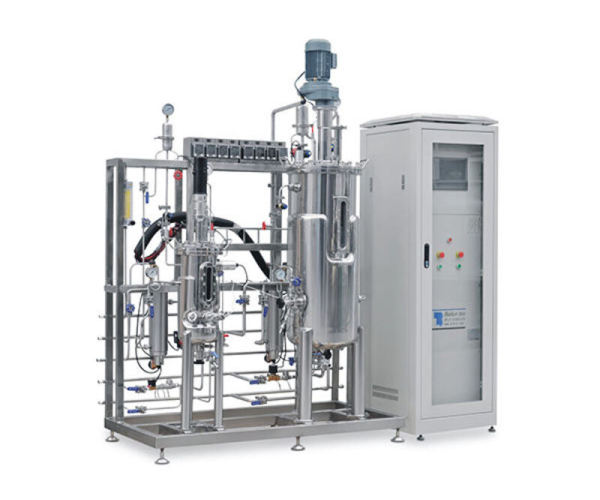
Start With Your Cells and Your Research Goal
Where are these systems used?
Sizing the Vessel: Working Volume Matters
Vessel Options Side by Side
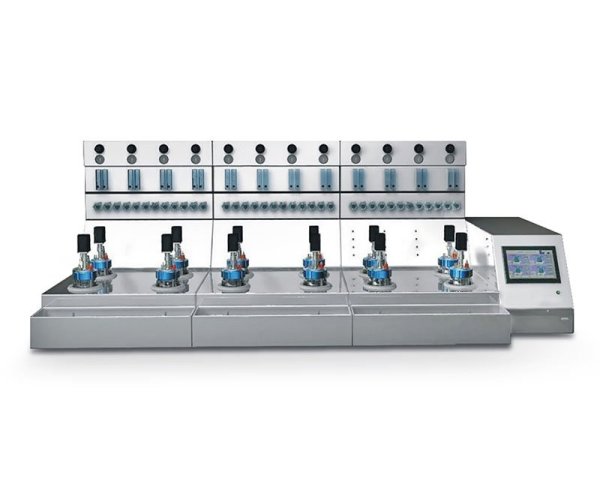
One Vessel or Many? The Parallel Advantage
What Does the MINI System Offer?
Glass or Stainless Steel: Picking the Material
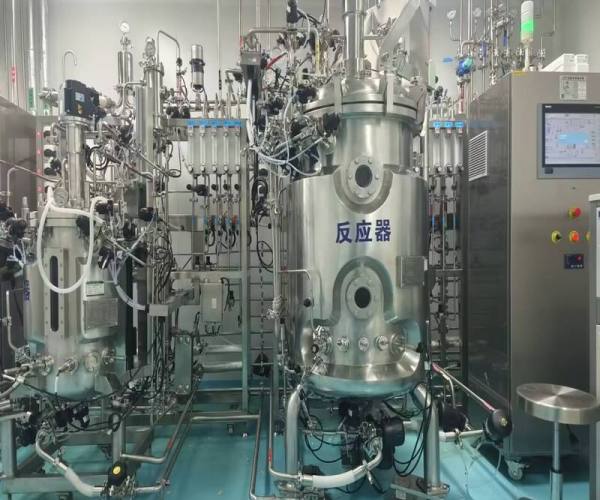
Control Features Every Lab Should Check
Optional Add-Ons Worth Asking About
Mixing, Gassing and Sterilization Choices
Stirring
Gassing
Sterilization
Planning the Path From Bench to Production
How long does delivery take?
What to Look for in a Bioreactor Supplier
What Mistakes Should You Avoid When Buying?
FAQs
What size vessel suits early cell screening?
How many vessels can one parallel system control?
Can glass benchtop vessels be autoclaved?
Which pH and DO sensors do stainless models use?
Can I order a single unit?
What details should I send when asking for a quote?
Conclusion