
Can a Stirred Tank Fermenter Run Perfusion Culture? Cells, Yield, Stability?
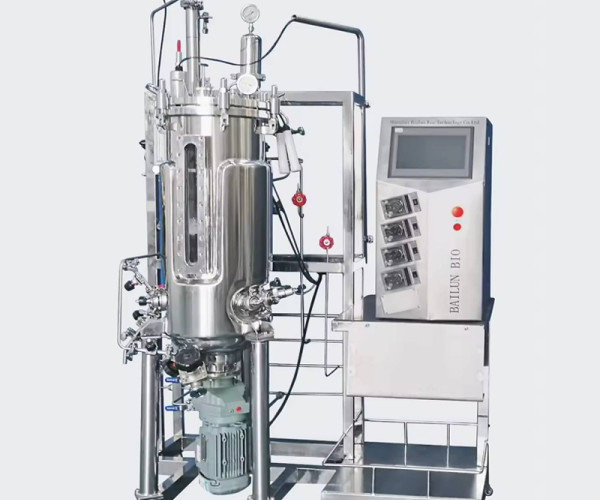
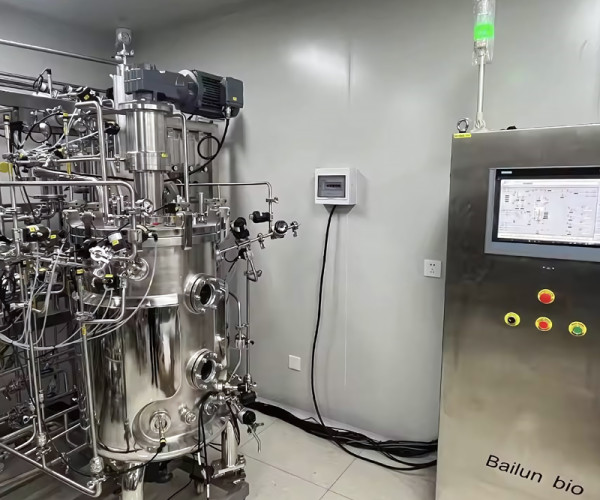
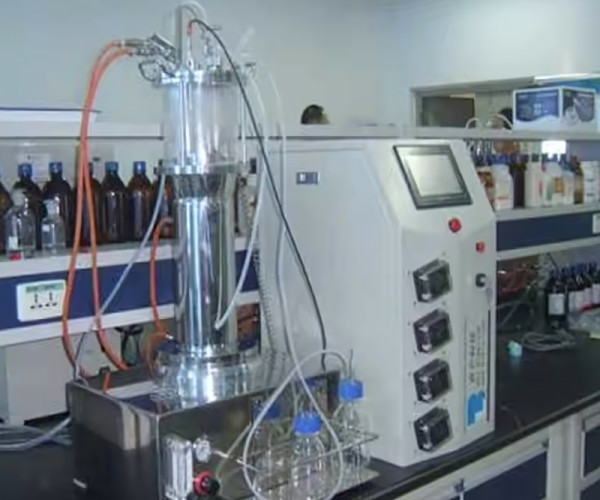
Can a stirred tank fermenter run perfusion culture without losing cells? Yes, but it needs a cell retention device. The tank mixes the liquid. It controls gas, pH, DO and temperature. The device keeps the cells in the tank. Used medium and product flow out. Perfusion often gives more live cells than batch or fed-batch runs. More of them stay alive. Bailun Biotech (Jiangsu) Co., Ltd. has a team with more than 25 years of experience. The team designs, builds and installs equipment for growing bacteria and cells. Its tests show one thing. Keeping cells healthy protects yield. Below, you will learn three things. How many cells can perfusion hold? Where do you gain or lose yield? What keeps a long run stable? Perfusion culture is a way to run a tank. Fresh medium flows in. Harvest liquid flows out. The cells stay in the tank. In batch and fed-batch runs, the cells and product stay inside until you harvest. A standard stirred tank bioreactor is already a closed tank that you can control. The missing piece is cell retention. Bailun's stirred tank fermenter range covers the tank part. Retention devices use filters, ultrasound, gravity or spinning. Membrane filtration is widely used. It holds cells well and scales well. A stainless steel fermenter must keep every setting steady for the whole run. These facts come from Bailun's spec sheet. The tank has a jacket and is made from SS316 and SS304 stainless steel. Tank design pressure is 0.3 MPa. Jacket design pressure is 0.35 MPa. The polish is 0.4 to 0.6 µm. The diameter-to-height ratio is 1:2.2 to 2.5. The tank's drive can be mechanical, on the top or bottom. It can also be magnetic, on the top. Three six-blade paddles mix the liquid, and you can set their height. They run at 50 to 1000 rpm or 50 to 400 rpm. Feeding and antifoam dosing are automatic, by peristaltic pump. A Siemens PLC (control unit) runs these controls. It has a 10 or 15 inch touch screen. The full list is on the steady state perfusion bioreactor page. The pH range is 2.00 to 12.00, with ±0.1 accuracy. Dissolved oxygen (DO) reads 0 to 150%, with ±3% accuracy. Both sensors are from Hamilton or Mettler. DO is linked to stirring and oxygen supply. The page also lists some options. They include a live cell (biomass) sensor, a weight system, a level sensor and a 4-valve feeding group. The page does not link them to perfusion. Ask Bailun if they fit. A stirred tank fermenter cannot hold cells back on its own. So the retention device decides the result. In perfusion, the filter is usually a hollow fiber column with tangential flow. Liquid keeps moving across the membrane surface. This sweeping motion cuts clogging and build-up. It also keeps filtering steady over a long run. Bailun compares both flow types in its ATF and TFF comparison . ATF is a tangential flow technology It has an air powered diaphragm pump. It has little shear (force on cells). It is difficult to operate. The air drive could be too feeble at high cell density, however. It also requires a vacuum source. ATF amount is typically determined by culture size. TFF is a tangential flow technique. It has a one-way pump. Shear was greater in older peristaltic pumps. The vendors then switched to low shear centrifugal pumps. The flow range of TFF is wider and it offers higher pumping power. One set for various reactor sizes. In Bailun's 4 L test, ATF reached 132×10⁶ cells/ml. TFF went up to 214×10⁶ cells/ml. The first test used a 2 L culture. The cells were CHO cells that make mAb. The hollow fibers had a 1 mm inner diameter and 0.2 µm pores. Shear stayed under 2000 s⁻¹. Peristaltic TFF grew cells more slowly than ATF. Cells died faster. More product was held back. The 100 nm particle count was close to 4.5 times higher by Day 8. TFF with a low-shear centrifugal pump matched ATF. The second test used a 4 L WAVE bioreactor. It was not a stirred tank fermenter. The hollow fibers had a 1 mm inner diameter and 0.2 µm pores. The membrane area was 850 cm². Setup Cell density (×10⁶ cells/ml) What happened Viability Yield depends on how much product passes through the membrane. When many cells die, they release DNA, proteins and other cell parts. These can clog the column. They can also hold back more product. The team then killed some cells on purpose. The 100 nm particles rose as more cells died. With a centrifugal pump, TFF and ATF gave similar product recovery. Keep cells healthy to protect yield. A long run stays stable when parts switch by themselves. Bailun's automatic perfusion system is TFF-based. It uses a low-shear centrifugal pump. The system switches between two hollow fiber columns. It also switches between medium tanks. It removes some cells by itself (cell bleeding). The bioreactor's own controller runs the system. It also records and exports data. Very high density has limits. In Bailun's test, growth slowed. The likely causes were higher viscosity, pCO2 reaching 31 kPa and limited oxygen transfer. The stirred tank fermenter has these hygiene features: Clean in place (CIP) with a spray ball, plus CIP control valves and pipelines Manual sterilize in place (SIP), with optional program control A sampling valve and a zero dead zone bottom valve. You can sterilize each on its own A condenser before the exhaust A stirred tank fermenter from Bailun's stainless range covers sizes from 100L to 500L and beyond. Total volumes include 100L, 200L, 500L, 1000L, 5KL, 50KL and 500KL. The working volume is 30% to 70% of the total. Run trials in a 100L fermenter bioreactor, then move up the same range. The stainless conical fermenter page has the same spec sheet. One perfusion unit supports 50 to 500 L bioreactors. You do not need to buy it again when you scale up. Tanks from 30L to 500L have a lid lift. Tanks of 700 to 1000L have a manhole. An automatic fermenter bioreactor suits early testing. It runs 2 to 6 glass vessels. Each vessel holds 1 to 10 L. Each has its own sensors and 4 peristaltic pumps. See the automatic multi-vessel bioreactor page. Bailun makes bioreactors from 0.1 L to 1000 KL. When you buy an industrial fermenter, the maker matters as much as the model. Site City Area The company lists 500 staff and 86 nations. Its second Lianyungang factory has enough space to build 500KL fermenter vessels. See the Bailun factory history. Bailun works on fermentation and cell culture. It focuses on the biopharmaceutical and bioengineering industries. A cell culture R&D center covers steps from cell culture and preservation to bioreactor validation. Its validation team has pharmaceutical experience. It offers validation service for GMP (FDA, EU, TGA, cFDA) rules. You can check each item on the Bailun certificate gallery: ISO 9001 ASME CE Pressure vessel production license Special equipment production certificate Lab equipment takes 2 to 3 months. Pilot equipment takes 3 to 4 months. Industrial equipment takes 4 to 12 months. The one-stop service covers CFD modeling, factory and site acceptance tests (FAT, SAT), installation and training. No. A stirred tank fermenter is not a perfusion system by itself. It becomes one when you add a cell retention device. Yes. One Bailun perfusion unit supports 50 to 500 L bioreactors. Viscosity, pump pressure, pCO2 and oxygen transfer can limit cell density. In Bailun's 4 L test, pCO2 reached 31 kPa. ATF uses an air-driven diaphragm pump. TFF uses a one-way pump. Lab equipment takes 2 to 3 months. Pilot equipment takes 3 to 4 months. Industrial equipment takes 4 to 12 months. Yes, Bailun offers overseas installation. The minimum order is 1 unit. A stirred tank fermenter can run perfusion culture. It needs a retention device to keep the cells inside. Bailun Biotech (Jiangsu) Co., Ltd. can help with both parts. It makes the tank and a TFF-based perfusion system. Send your URS (user requirements) through the request a Bailun quote page. If you have none, answer two questions. Do you grow bacteria or cells? What are your products used for?What Perfusion Culture Means Inside a Tank
How a Stirred Tank Fermenter Supports Perfusion
Vessel Build and Hygienic Surface Finish
Agitation, Gas and Feed Control in One PLC
Sensors That Show How the Cells Are Doing
Why Cell Retention Decides Perfusion Success
ATF: Low Shear but Limited Driving Force
TFF: Simple Setup With a Wider Flow Range
What Cell Density Can Perfusion Reach?
What Bailun's 2L CHO Comparison Showed
How High Cell Density Climbed in Testing
High-Density Results at a Glance
Where Yield Is Won or Lost in Perfusion
Keeping Long Perfusion Runs Stable and Clean
Hygiene Features on the Tank
From 100L Trials to a 500L Industrial Fermentor
Inside the Factory Behind Each Stainless Tank
Factory Scale Across Shanghai and Lianyungang
One Focus: Fermentation and Cell Culture
Factory Certificates Buyers Can Verify
Delivery Cycle From Lab to Industrial Scale
FAQs
Is a stirred tank bioreactor the same as a perfusion system?
Can one perfusion system serve tanks of different sizes?
What limits cell density at very high levels?
What is the difference between ATF and TFF?
How long does delivery take?
Does Bailun offer overseas installation?
Conclusion