High end equipment such as animal cell reactors urgently need breakthroughs in core technologies

1、 Biological manufacturing 'heart'
Whether it is the production of antibiotics, amino acids, enzyme preparations, or the development of biomedicine and new materials, it is indispensable.
Its function is to provide a stable and controllable "home" for microorganisms or cells, allowing them to grow efficiently and produce target products.
Especially for high-end equipment such as parallel reactors used for high-throughput screening and animal cell reactors used for antibody drug production, the core technology is often monopolized by foreign companies.
Some research institutions and enterprises need to purchase imported equipment at high prices.
2、 R&D is running fast, but validation has' fallen off the chain '
In recent years, synthetic biology has developed rapidly.
In the laboratory, scientists can use gene editing and automation platforms to construct hundreds of high-yield bacterial strains in a year - something unimaginable in the past.
But the question is: how to quickly verify the new strain when it comes out? The traditional shake flask cultivation method can only process a few samples at a time, with rough parameter control, poor repeatability, and difficulty in horizontal comparison of data.
The result is that front-end innovation is advancing rapidly, while back-end verification is struggling.
Bacterial strains grow quickly, but are not well nurtured and cannot be accurately measured, resulting in a large number of potential strains being buried in inefficient experimental processes.
3、 Small volume, high energy: Parallel reactor breaks through
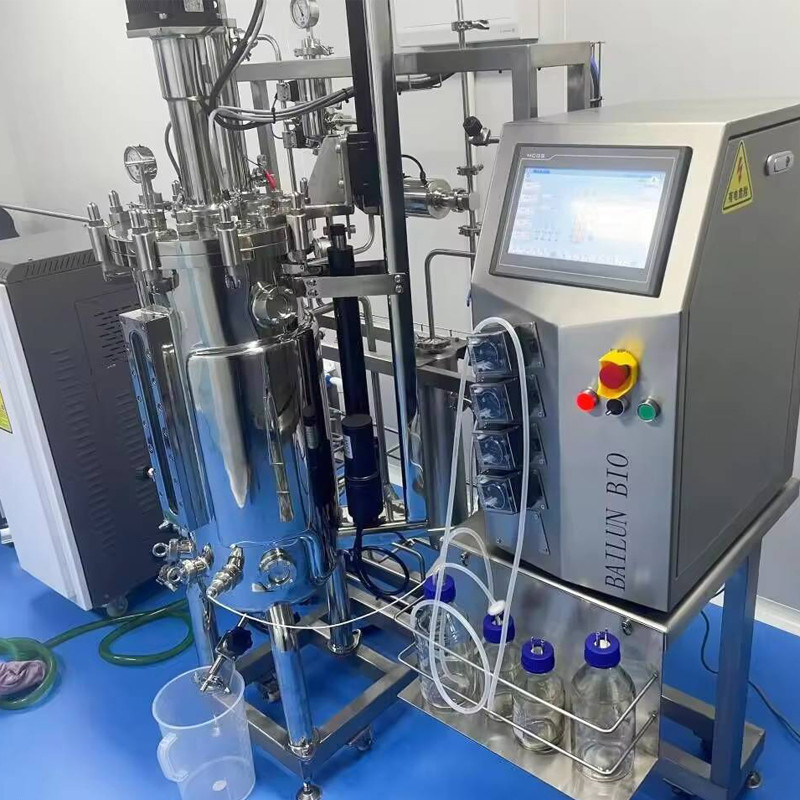
Faced with this bottleneck, China has begun to focus on independent research and development of high-performance bioreactors.
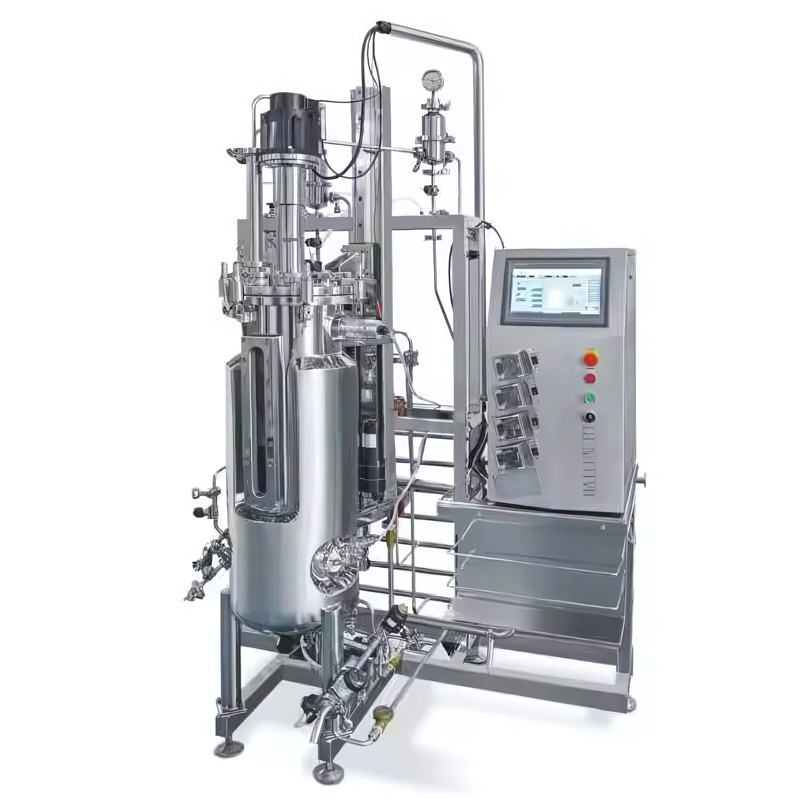
In recent years, a batch of new "microbial parallel bioreactors" have been implemented one after another, becoming the key to breaking through the situation.
The core breakthroughs of these devices lie in two aspects: miniaturization and high parallelism.
miniaturization
The whole machine can be placed on a regular experimental platform without taking up space and with low energy consumption;
High parallelism
One device can run 16, 24, or even more independent reaction units simultaneously, with each unit capable of precise temperature control pH、 Dissolved oxygen, stirring and other parameters, and real-time recording of data.
This means that strain performance testing that used to take several weeks to complete can now be done in just a few days, and the data is more reliable and comparable.
More importantly, the entire process has a high degree of standardization, laying a solid foundation for scaling up production in the future.
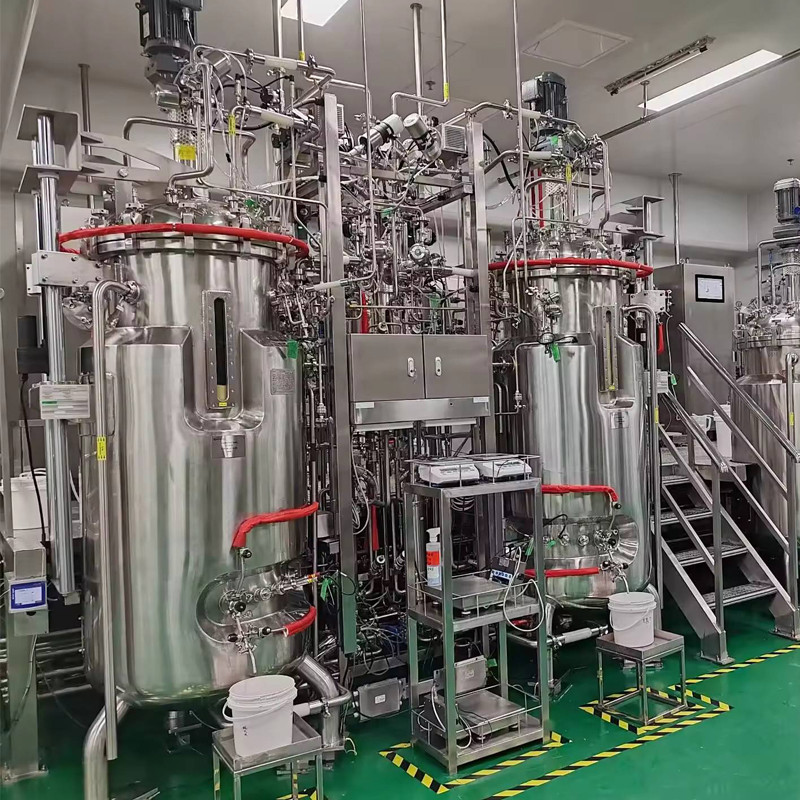
Shake bottles and fermentation tanks are not the same thing at all. Their gap is not a difference in quantity, but a gap in quality
4、 The Bridge from Laboratory to Industrialization
The value of high-performance reactors goes beyond improving research efficiency.
It is also an important bridge connecting laboratories and factories.
In biomanufacturing, a strain of bacteria goes through multiple rounds of process optimization and scale-up validation from "capable production" to "mass production".
If the early data is inaccurate and the process is uncontrollable, the later amplification is prone to failure, resulting in huge waste.
The high-quality and scalable process data provided by high-throughput parallel reactors greatly reduces industrialization risks.
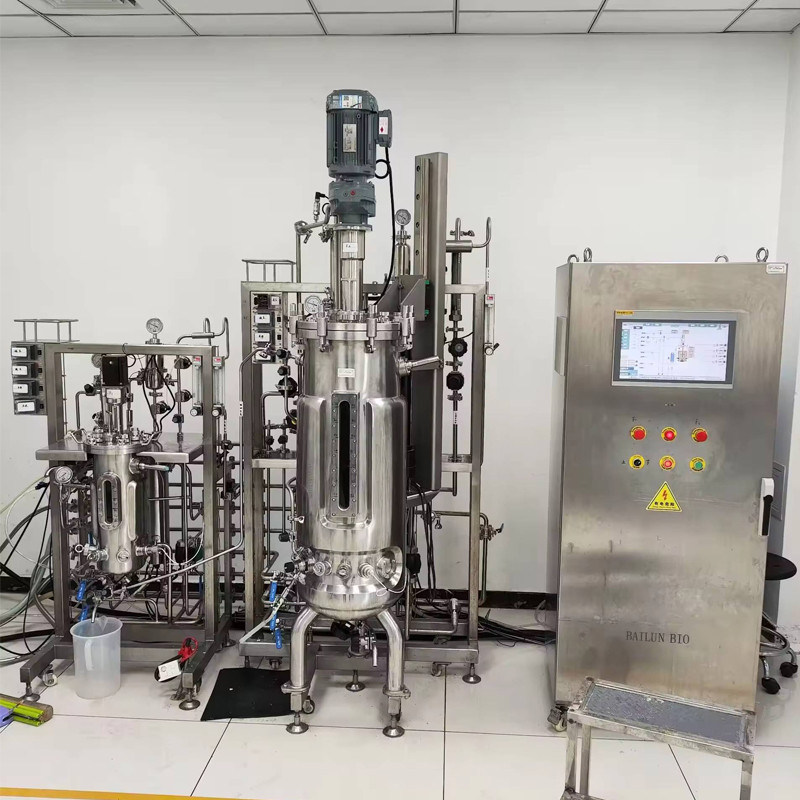
With the deepening dependence of industries such as biomedicine, green chemicals, and functional foods on biomanufacturing, the demand for such intelligent, efficient, and domestically produced equipment is rapidly increasing.
Getting rid of import dependence is not only about cost, but also about industrial chain security and innovation autonomy.
5、 Future: More than just 'usable', it must be 'easy to use'
Of course, breakthroughs are just the beginning.
The real challenge lies in: how to make domestic equipment move from "usable" to "easy to use" and "willing to use"?
This requires continuous optimization of reliability, software experience, after-sales service, and deep adaptation to upstream and downstream processes.
Next, bioreactors will also integrate more intelligent technologies, such as AI based process prediction, remote monitoring, automatic feedback regulation, etc., evolving towards a more flexible and intelligent direction.