The earlier the limitations of the pilot equipment are taken into consideration, the smoother the road ahead will be

Where is the problem? Many times, it's not that the small-scale test was not done well, but rather that the "temper" of the pilot equipment was not taken into account from the beginning.
Many teams are accustomed to "completing small tests first and then finding equipment", which is actually putting the cart before the horse.
The pilot test is not simply replacing the flask with a large kettle, but a switch in the entire engineering logic.
Waiting until the small-scale trial is over to match the equipment often results in finding that the workshop does not have suitable reaction vessels, filters cannot handle this crystal structure at all, or the drip accuracy does not meet the requirements - passively modifying the workshop or adjusting the process is costly and time-consuming.
The truly efficient approach is to think synchronously in the middle and later stages of the pilot test: what equipment should be used for this operation in the pilot test room? How to do it?
Below are several key unit operations to explain how to think clearly about "device adaptability" in advance.
The world's largest producer of fermented products, with a production capacity accounting for 70% of the world's total, has a strong industrial foundation, and has the potential to leap from a "manufacturing power" to a "bio intelligent manufacturing powerhouse"
1、 Reaction feeding: no one should be careless about the sequence, method, or sealing
Direct feeding: In the small-scale experiment, pouring all at once is not a problem, but in the pilot test, the solid is added first and the solvent is added later, which easily accumulates in the groove of the bottom valve and cannot be stirred.
Moreover, solids are prone to sticking to the walls, so a portion of the solvent needs to be reserved specifically for "washing the kettle".
Batch addition of solids: In small-scale experiments, to control temperature or suppress side reactions, the material will be added in several batches. If the pilot test still relies on manual opening of manholes for feeding, not only is the efficiency low, but it is also a major safety risk for highly toxic and sensitive materials.
At this point, it is necessary to plan in advance to use a nitrogen protected feeding funnel, or even a glove box.
Drip operation: This is the most common "minefield" in magnification. The small trial constant pressure drip funnel is very stable, but the pilot test requires the use of a metering pump and a diaphragm pump.
The key is to provide the engineering team with clear control parameters - is it based on temperature feedback speed regulation? Or is it a fixed time and uniform dripping? The vague words' slow drip 'will leave on-site operators at a loss.
Also, don't forget to check if the material of the pump (including the sealing ring!) can withstand your material, otherwise corrosion and leakage can have serious consequences.
2、 Details of filtering
The small-scale filtration can be completed in a few minutes, but it does not mean that the pilot test can be successfully filtered.
Particles that are too fine, viscosity that is too high, and crystal structure that is fragile can cause the plate frame or bag filter to "strike".
During the trial stage, it is necessary to record the status of the filter cake, filtration speed, and whether filter aids are needed.
If the filter paper is difficult to dry, then it is highly likely that a centrifuge will be used for the pilot test, and even cross flow filtration (such as ceramic film) may be considered.
Don't wait until hundreds of liters of liquid get stuck in the filter cylinder to think of a new solution.
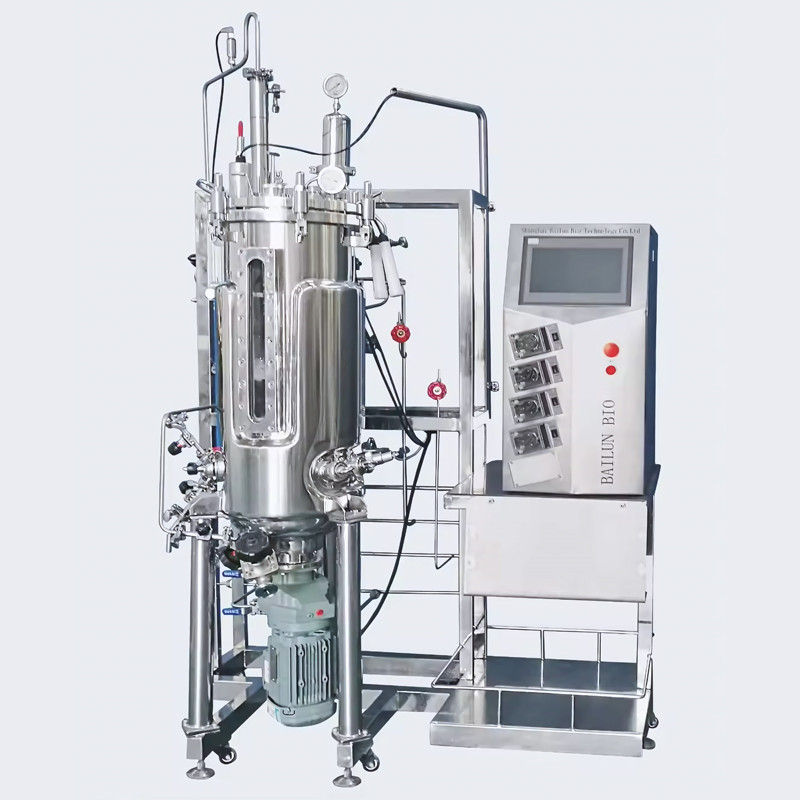
3、 Distillation techniques
Using rotary evaporation for half an hour to dry the small-scale experiment does not mean that the pilot reactor can be quickly completed.
The heat exchange area of a regular reactor is limited, and steaming 300 liters of solvent may take a day.
If your process relies on the rapid removal of by-product solvents (such as constant volume reactions), it is necessary to evaluate in advance whether efficient equipment such as falling film evaporators and scraper film evaporators are needed.
Of course, cleaning such equipment is troublesome, and caution should be exercised when frequently changing products in GMP workshops.
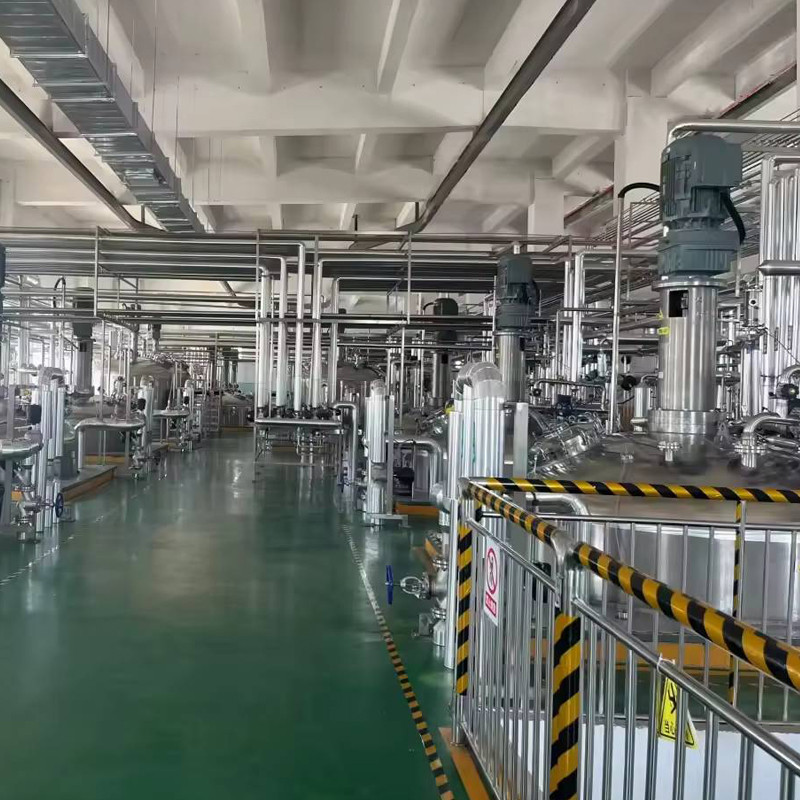
4、 Key points of dryness
A few grams of samples were evenly dried in a small trial vacuum oven, but for a pilot test of several tens of kilograms of material, if the same method is used, the outer layer will dry and the inner layer will still be wet, even forming hard lumps.
For heat sensitive or high-value products, double cone vacuum drying (by rolling), three in one filtration washing and drying machine (to avoid transfer losses), or even freeze-drying may be required.
During the small-scale test, the flowability, thermal stability, and susceptibility to oxidation of the material should be tested, which directly determine the drying method for the pilot test.
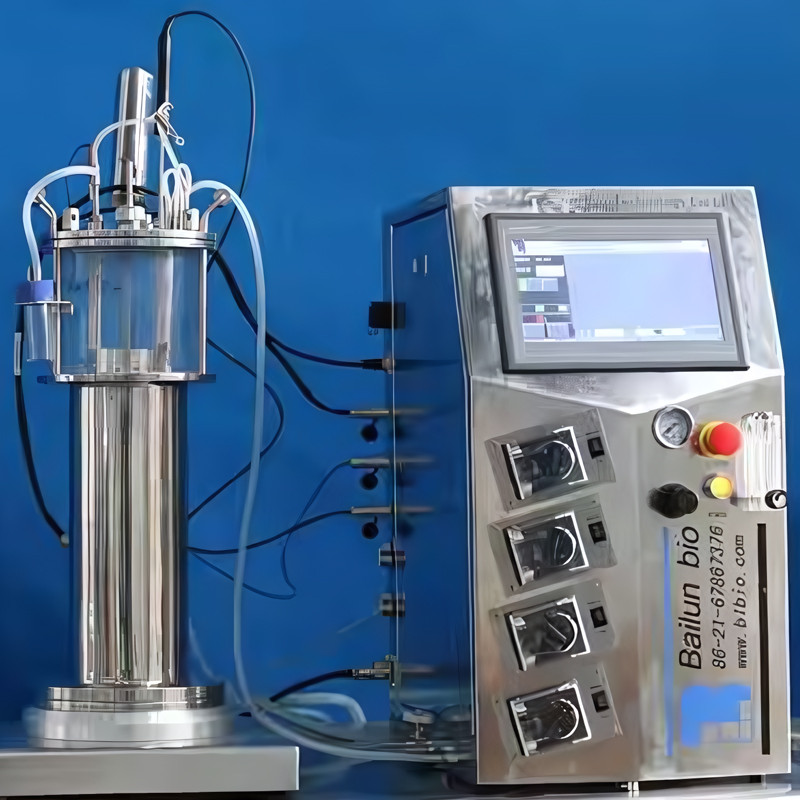
5、 Don't ignore these details, devil
Mixing forms: anchor, paddle, turbine... Different types of mixing have a significant impact on mass and heat transfer. Homogeneous reactions may not matter, but when it comes to solid-liquid suspension or gas-liquid reactions, choosing the wrong stirrer can directly cut the reaction efficiency.
Online pH regulation: For small-scale trials, the pH meter is manually adjusted. For pilot trials that require real-time and precise control, an automatic drip system and an online pH probe are required. Otherwise, relying on manual monitoring of the watch will result in large errors and high labor intensity.
Crystallization cooling program: In small-scale experiments, temperature control can be programmed, while in pilot scale experiments, the large kettle has a higher thermal inertia and a much slower cooling rate.
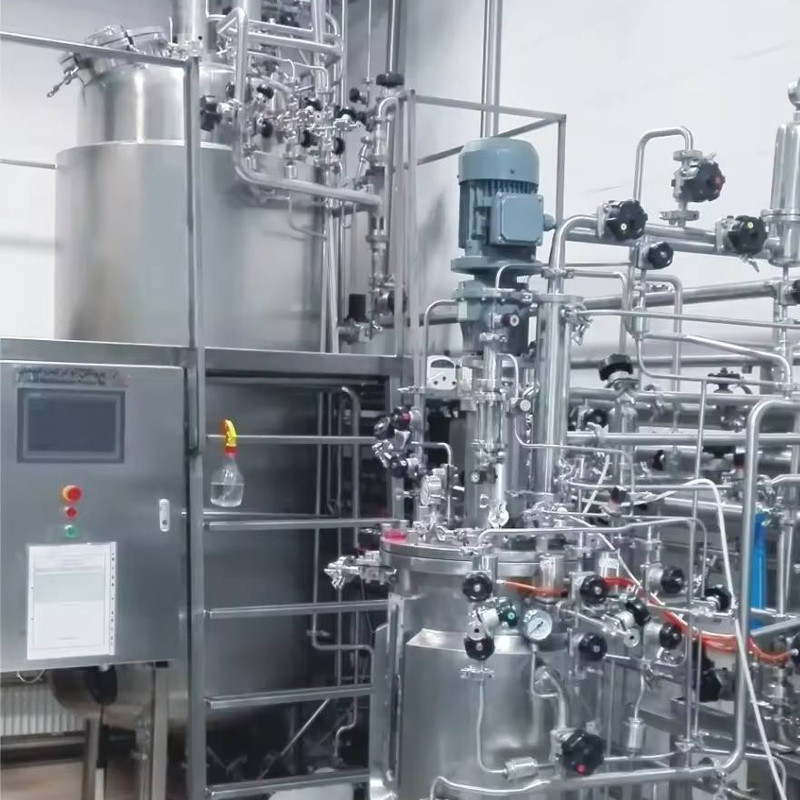
If the crystal structure is sensitive to cooling gradients, simulation experiments must be conducted in advance, otherwise the particle size distribution of the product will not meet the standard.
The endpoint of the pilot test is the starting point of the pilot test
The core goal of the pilot test is not only to connect the route, but also to provide engineering data and boundary conditions for amplification. The earlier the limitations of the pilot equipment are taken into consideration, the smoother the road ahead will be.
Next time you do a small test, why not ask yourself one more question: "Can this operation really be done like this in the workshop
——The answer may be hidden in the stirring blades of the reactor, the aperture of the filter, or the accuracy of a metering pump.