Abnormal color of fermentation broth is not scary, but it is afraid of empirical one size fits all approach or being led by the "probability judgment" given by AI models

Some people stop the can as soon as they see the color is wrong, while others grit their teeth and continue down, resulting in either wasting a whole batch of materials or the product indicators collapsing completely.
In fact, abnormal color of fermentation broth is never an isolated problem.
1、 What does the color change mean?
Firstly, it must be clarified that normal fermentation broth is not uniformly "clear and transparent".
Different strains, products, and stages have inherent differences in color.
For example, penicillin fermentation tends to turn yellow in the early stages and may have a hint of brown color in the later stages; Some yeast fermentations may present a milky white or light beige color; Engineering bacteria that produce pigments, such as certain actinomycetes, may themselves cause the liquid to turn red, purple, or even black.
So, the premise of 'abnormality' is deviating from your familiar normal trajectory. If you haven't even established a "standard chromatography" for your own process, then talking about "abnormalities" is a bit blind.
2、 The real reasons for common discoloration
1. Bacterial infection - the most feared but not necessarily the first thought
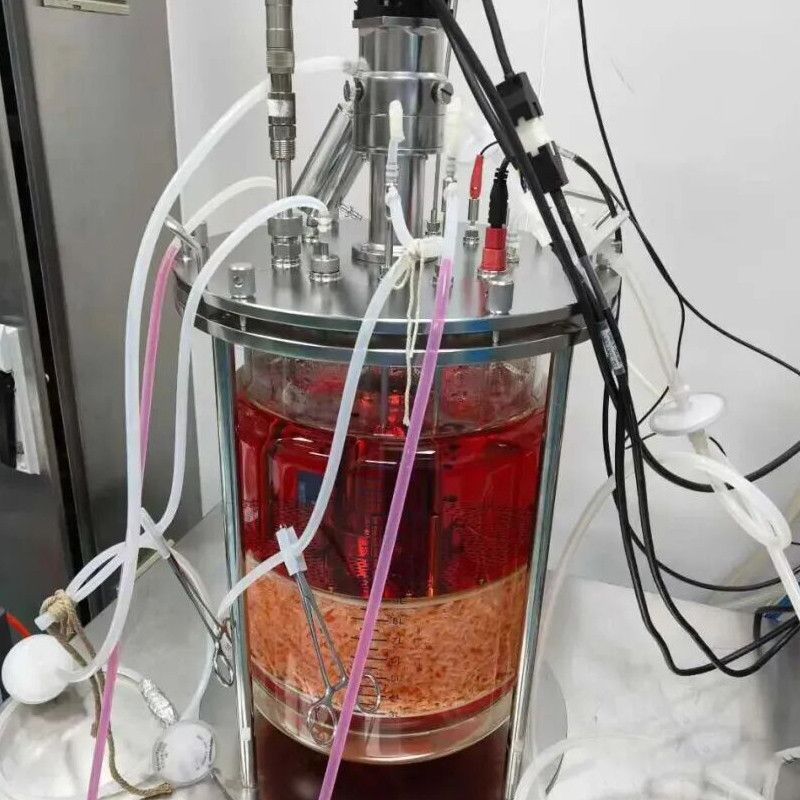
Many people's first reaction when they see a dark, cloudy, or odorous color is "bacterial contamination!" Indeed, bacterial contamination (especially bacteriophages or pigment producing bacteria) often causes liquids to turn black, green, bubble, or produce flocculent substances.
But don't rush to conclusions. First, perform a microscopic examination and sterile test: If there are only target bacteria under the microscope and no miscellaneous bacteria on the plate, then it is highly likely that it is not contaminated. Excessive suspicion of bacterial infection can actually conceal the real problem.
3. Insufficient dissolved oxygen and metabolic problems
In aerobic fermentation, once the oxygen supply cannot keep up (such as mixing failure, decreased ventilation, high foam), the bacteria will enter the "hypoxia stress" state.
At this point, the metabolic pathway may shift towards the accumulation of by-products, some of which are colored (such as certain quinones and phenolic substances), causing the liquid to turn yellow, brown, or even dark brown.
At this point, just looking at the color is not enough. It is necessary to combine the DO (dissolved oxygen) curve, pH changes, and exhaust CO ₂/O ₂ ratio to make a judgment.
4. There are issues with the composition of the culture medium
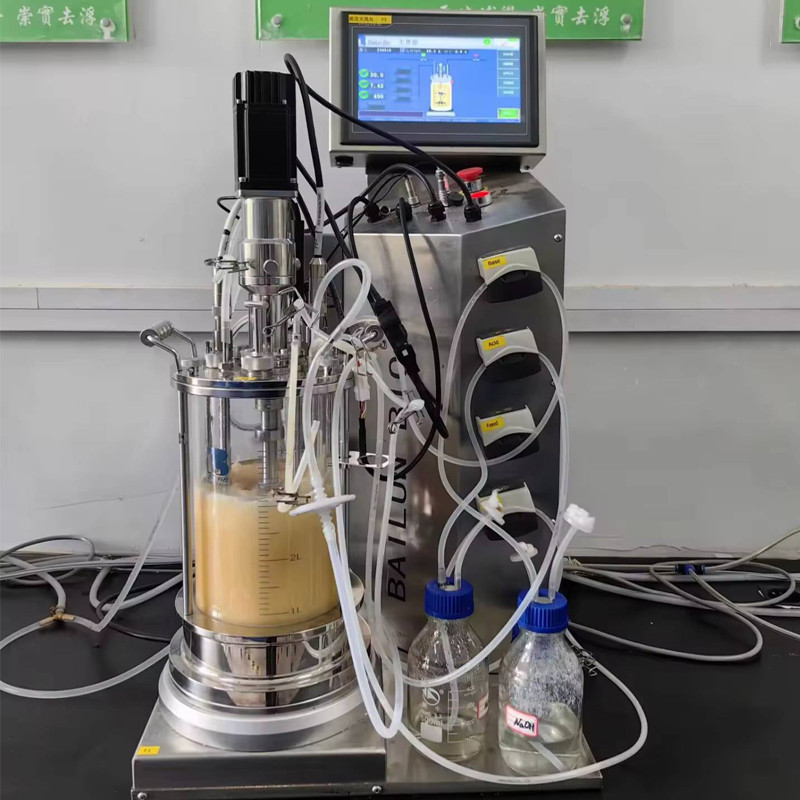
Carbon source coking: During high-temperature sterilization, reducing sugars such as glucose undergo Maillard reaction with amino acids to produce brown melanoidins, making the initial culture medium yellow. As fermentation progresses, the color may deepen.
Metal ion catalytic oxidation: If the concentration of iron and copper ions is too high, they will catalyze the oxidation of polyphenols or unsaturated fatty acids under aerobic conditions, producing colored polymers.
Precursor or inducer residue: Some processes may add precursor substances (such as phenylacetic acid for penicillin), which themselves or their degradation products may be colored.
5. Bacterial autolysis - late stage signal
In the later stage of fermentation, if the bacterial cells begin to self dissolve, a large amount of intracellular contents (such as nucleic acids, proteins, coenzymes) are released into the fermentation broth, which can cause the liquid to become cloudy, gray, or "meat soup like".
At this point, there is often a sudden increase in pH, a decrease in OD value, and a halt in product synthesis. This is a signal of improper process control or excessively long cycle.
6. Improper equipment or operation
The tank wall cleaning is not thorough, resulting in residual pigments or coking materials from the previous batch;
Excessive addition of defoamers (especially certain silicone oils) may cause the liquid to turn white or produce opalescence;
The sampling valve is contaminated or exposed to air for too long after sampling, causing oxidation and discoloration.
7、 What should we do?
1. Don't panic, take notes first
Immediately take photos, measure pH, record DO, and take samples for record keeping. The color description should be specific: "light yellow", "amber", "soy sauce", and "gray green" are more useful than "changed color".
2. Cross validation, don't just focus on colors
Construct complete evidence by combining microscopy, sterile testing, metabolic parameters (sugar consumption, ammonia nitrogen, product concentration), exhaust gas analysis, etc. Many times, color is just the tip of the iceberg.
3. Tracing back operation logs
Have you changed suppliers for the ingredients?
Is the sterilization procedure abnormal (temperature/time deviation)?
Is there manual intervention or alarm in process control?
Fermentation is a "living" process, and microorganisms do not grow according to textbooks.
Abnormal colors are not scary, what's scary is using empiricism to apply a one size fits all approach or being led by AI models' "probability judgments".
A real expert is a person who can understand what the flora is saying from the color, smell and foam of a can of liquid.
After all, fermentation is not about controlling machines, but about communicating with bacterial strains.