
Which Stirred Tank Bioreactors Suit Insect Cell Culture? Shear, Speed, Sensitivity
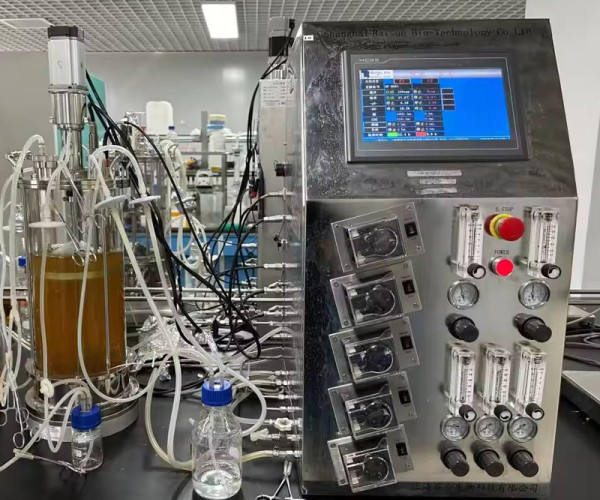
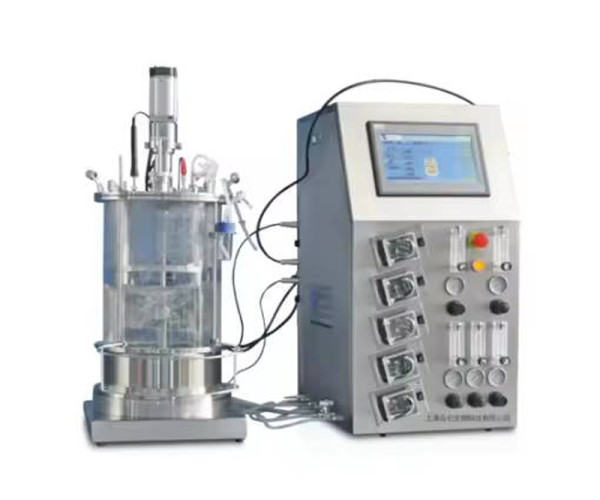
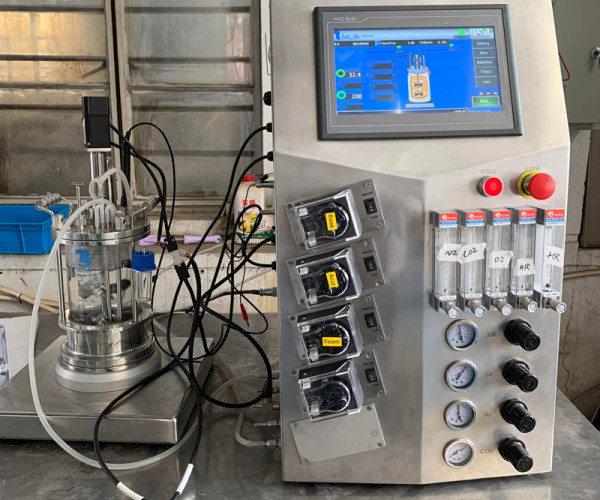
Can we use a standard stirred tank bioreactor to handle insect cells the same way as bacteria or yeast? A lot of engineers think one setup fits all cell types. But insect cells are more fragile than most cells. So that old assumption often falls apart. This guide describes how to use this equipment. That's why it's still a favorite for biotech work. It also talks about changes that occur when insect cells are involved. You will learn about the type of impeller, mixing speed and air flow. These are the key decisions that safeguard vulnerable cells. Shear Sensitivity: Insect cells must be mixed gently. Impeller Selection: Smooth impellers protect cells better than sharp ones. Scalability Flexibility: The systems can be scaled up and down. Single-Use Option : Disposable bags reduce cleaning time and risk. Right Setup is Important: Good design is not just software. A bioreactor is a closed vessel. It uses a spinning component called an impeller This section is a combination of cells, food and gas. Control of oxygen, pH and heat. This enables cells to grow at a constant rate. This design has been number one for years, because it is easy to build at any size and easy to control. Most units have the same basic components, a tank, an impeller, a gas inlet (a sparger) and sensors for heat and pH. The inner wall is lined with flat bars called baffles. They prevent the liquid from simply circling. This setup also works for bacteria, yeast, animal cells, and insect cells. Part Function Common Material The working idea is straightforward. The Impeller is driven by a motor. The Impeller moves liquid through the tank. This transports oxygen, food and heat to every cell. Sensors are always checking conditions. They adjust the feed, gas or heat as needed. Baffles break up the swirling flow. This results in mixing in more than one direction. A sparger below the Impeller introduces small air bubbles. Here is a typical stirred tank bioreactor diagram of this layout: the impeller shaft is in the middle, the baffles are on the walls, and the sparger is near the bottom. The four basic types of bioreactors are stirred tank, airlift, bubble column and packed bed. Stirred Tank : Uses an impeller to mix. Most common and most versatile type. Airlift: Gas bubbles rise and mix. No need for an impeller. Bubble Column : uses only gas bubbles from bottom. Nothing moving at all. Packed Bed : Cells are attached to a support and the liquid is passed through. The most popular design is still the stirred tank. They give the best control of oxygen and mixing. Neither type wins all the time. The choice depends on the cell type and the goal. A stirred design with its Impeller provides strong, steady mixing. Instead, a sparged system uses rising gas bubbles. Many new setups use both parts in conjunction. The mixture is called a sparged stirred-tank bioreactor. It provides gentle mixing and good oxygen flow. Such mixing is often most effective for insect cells, which need oxygen but cannot stand vigorous mixing. Feature Stirred Tank Sparged Only Sparged Stirred Tank There are many advantages to these tanks for biotech work: Even Mixing : Even distribution of food and oxygen throughout the tank. Scalable Design : It works small and large under the same rules. Proven Control : Proven control techniques that have been used for years. Wide Compatibility : Compatible with bacteria, yeast and animal cells and insect cells. Flexible Use : Can be run in batch, continuous or single use. This is the reason why this design still remains a top choice in most gear comparisons. This mode does not work as a single fixed batch but with a constant feed in and constant product out. It maintains the culture in a stable condition, with little variation in growth over time. Batch systems are something else. They start each cycle anew and move as food runs low. Non-stop runs are good for big, steady needs. They also aid teams studying cell behavior in static conditions. A single-use stirred tank bioreactor replaces the traditional fixed steel tank with a disposable plastic bag. The teams used a new bag for each run and threw it away. This is without the deep cleaning that steel tanks require. Single-use systems reduce the time between batches. They also reduce the risk of germs spreading from one run to another. So many plants regard a simple stirred-tank bioreactor built this way as their first choice for early or flexible work- often shortened to a stir-tank bioreactor. The force on a cell from the liquid as it passes the impeller blades is called shear stress. Insect cell lines (eg Sf9 and Sf21) used in baculovirus expression systems do not possess the tough outer wall that bacteria have. That makes them vulnerable to this kind of force. Shear force increases with higher impeller speeds. This can cause cell wall rupture or slow growth. Impellers with sharp edges, like the Rushton turbine, cause more shear at a point. Sleek designs distribute the force more. In insect cell work, teams will often accept a slower mix to protect the cells. The real object is balance: enough oxygen, not too much force. The choice of the impeller is the starting point for good design of weak and delicate cells. Impellers are smooth and angled to softly push liquid. They are less dangerous than the turbine's sharp blades. A slower tip speed also reduces the force on each cell. How the air is matters, too. The air-liquid interface at the surface produces less shear than that for fine bubble sparging. Impeller Type : Not blades, smooth or formed Mix Speed : Low speed, longer mixing time Air Method :Surface air or light small-bubble air Extra Aids : Gentle agents relieving stress of bubbles In each case the design choice for the stirred tank-bioreactor has to be justified. Don't settle for default settings. These tank bioreactors are utilized well beyond insect cell work. The equipment is used to make proteins and antibodies. Vaccine makers make cells for vaccine parts with the same basic design. These tanks are also used for stable, large batch output of factory size fermenting, as in the case of enzymes. Insect cells can also be used to make proteins that are hard to make in bacteria alone. The price is mainly about size, material and control level. The bigger tanks cost more because of the materials and the construction. Single use stirred tank bioreactor tanks are cheaper initially but you need new bags every time you use them which adds up. Steel tanks are more expensive upfront but last for years. More controls will cost more. Basic manual pH, oxygen and feed controls are cheaper than auto ones. Buyers can request a stirred tank bioreactor pdf spec sheet. It provides precise sizes and materials for an accurate quote. It is a tank that has a rotating impeller. This part is where you mix food and gas with cells or microbes. It also keeps heat, pH and oxygen constant. There are four main types: stirred tank, airlift, bubble column and packed bed. Stirred tanks offer the most control over mixing, making them the preferred type. Neither always wins. How fragile the cells are will decide the best choice. Many teams now use both to get the best mix. The motor turns the Impeller to mix the liquid. Baffles keep the liquid from just spinning around. A sparger introduces oxygen through small bubbles at the bottom. Yes, but only if you make the right design choices. Gentle impellers, slower mixing and careful air flow protect delicate insect cells like Sf9 and Sf21. The shear stress is mainly caused by the impeller velocity and the blade geometry. They exert force on fragile cell walls. The slower speed and softer blades greatly reduce this stress. The equipment continues to be the most trusted and flexible choice for biotech work. It will take care of everything from a simple batch of microbes to complex insect cell work. More careful setup is needed for insect cell culture: gentle impellers, controlled speed, air methods that protect delicate cells. This balance helps to preserve both yield and cell health. For teams constructing or upgrading a system for insect cell work, Bailun Biotech (Jiangsu) offers fermentation and bioreactor equipment with adjustable Impeller and air options. This makes it easier to match the gear to a delicate process, rather than forcing the process to fit generic equipment.Essential Facts
What Are Stirred Tank Bioreactors?
Key Parts of a Bioreactor Stirred Tank
Stirred Tank Bioreactor Working Principle
What Are the 4 Types of Bioreactors?
Stirred vs Sparged: Which Bioreactor Is Better?
Stirred vs Sparged Comparison
Advantages of Stirred Tank Bioreactors
Continuous Stirred Tank Bioreactor: How Does It Differ?
Single-Use Systems: Why They Are Gaining Ground
Shear Stress and Insect Cell Sensitivity: The Core Design Challenge
Design Considerations for Shear-Sensitive Cultures
Design Choices at a Glance
Where These Systems Are Used Across Industries
What Affects Stirred Tank Bioreactor Price?
Frequently Asked Questions
What are stirred-tank bioreactors?
What are the 4 types of bioreactors?
Which is better, a stirred or an aerated bioreactor?
How does a stirred tank-bioreactor work?
Can these bioreactors be used for insect cell culture?
What is the source of shear stress in insect cell culture?
Conclusion