
What Is kLa in Fermentation? Meaning, Range, Measurement
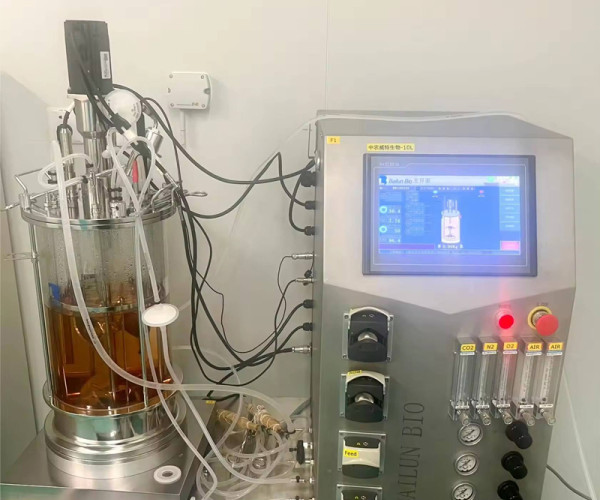
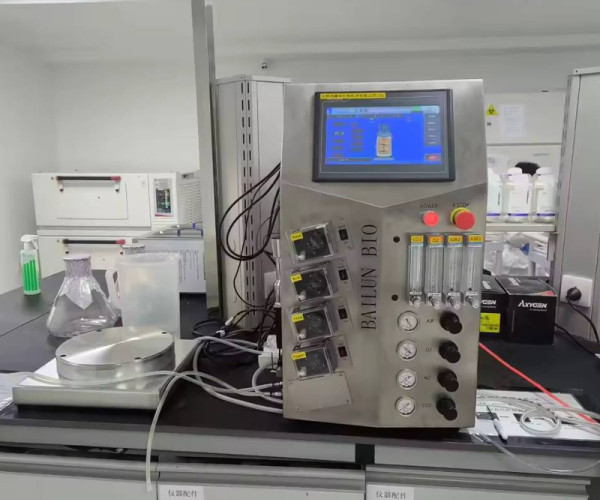
When cells begin to expand, why does dissolved oxygen drop quickly? Often, the tank cannot add oxygen fast enough. kLa in fermentation is the volumetric mass transfer coefficient. It tells how quickly oxygen moves from air bubbles into the liquid. Cells need oxygen. Water and oxygen, however, do not combine. What is kLa? What is a typical kLa range? How to measure kLa? How to increase kLa? We discuss these on this site. kLa stands for the coefficient of volumetric mass transfer. The rate of oxygen diffusion from gas to liquid is shown. One unit of liquid volume is used to count this. The units are h⁻¹ or s⁻¹. If everything else remains the same, a greater kLa means the tank delivers oxygen more quickly. kL is the liquid-side mass transfer coefficient. It demonstrates how oxygen quickly flows through the tiny liquid layer around a bubble. "a" is the surface area of bubbles per unit of liquid. Small bubbles have a larger surface area. One simple equation gives the oxygen transfer rate (OTR). OTR = kLa × (C − CL) * This liquid has a maximum oxygen capacity of C*. This level represents saturation. In this particular liquid, CL represents the oxygen that has dissolved. In the space between them, oxygen is forced into the liquid. Unit box: 1 s⁻¹ = 3,600 h⁻¹. So 0.05 s⁻¹ equals 180 h⁻¹. Oxygen has to travel through six stages before it reaches a cell. The thin liquid layer around the bubble slows it down the most. This is because oxygen is not very soluble in water. The oxygen pressure in the gas increases C* according to Henry's law. Inside the bubble (gas bulk) Thin gas layer at the bubble surface (gas film) The bubble surface (gas–liquid interface) Thin liquid layer around the bubble (liquid film) The liquid, mixed by the impeller (liquid bulk) The cell surface, then uptake into the cell Any time the oxygen uptake rate (OUR) exceeds the oxygen transfer rate (OTR), the concentration of oxygen in the solution decreases. Put simply, the rate at which cells use oxygen exceeds the rate at which it is supplied by the tank. Cells use oxygen at OUR = qO2 × X. Here qO2 is how much oxygen each unit of cells uses. There are X number of cells in the sample. Expanding the number of cells will increase the demand. Input Value Say the cells use more than 980 mg/L/h. Then CL keeps falling until supply and demand are equal. The most this tank can give is kLa × C*. That is 1,400 mg/L/h. If the cells need more, dissolved oxygen drops to zero. Cell type determines a normal kLa. Mammalian cells need about 1–20 h⁻¹. Most yeasts and bacteria need at least 100–500 hours. Culture type Typical band (indicative) Reason With the tank, the medium, and the test technique, the range also varies. Shaker flasks are listed at 10-180 h in a 2013 paper published in Biotechnology and Bioengineering (doi:10.1002/bit.24824). As far as bacteria are concerned, it details bench-scale stirred tanks operating at 400 h⁻¹. As a rough reference, use these numbers. Compare them to your own data. The gassing out technique determines kLa by monitoring the rate of change of dissolved oxygen after the gas is turned off. You can do it any of two ways. First you drive out the oxygen with nitrogen gas. Then go on the radio. Record the rising dissolved oxygen. Use in clean medium without cells. Turn off the air and let the reading fall. HOW FAST it falls is OURS. Then turn the air back on and note the increase. Our arithmetic is OUR math. Skip it and you'll get the incorrect answer. Set the agitation speed and airflow you want to test. Wait until the temperature and flow are steady. Change the gas. Use nitrogen for the static method. Stop the air for the dynamic method. Turn the air on and record the reading often. Plot ln(C* − C) against time. Find the slope. It equals −kLa. Use a rapid DO probe. Its reaction time must be substantially less than 1/(kLa). 1/kLa is 18 s at 200 h-1. A sluggish probe will provide an incorrect curve. There are two more ways. The sulfite technique is based on a chemical that eats up oxygen. The off-gas balance compares the oxygen in the incoming gas with the outgoing gas. The sparger and agitation have the greatest effects on kLa. They control the gas hold-up and bubble size. The share of tank volume that is filled with gas is known as the gas hold-up. The bubbles are subsequently dispersed throughout the liquid by the impeller. Factor Effect on kLa Change only one thing at a time, so you can see what worked. To maintain kLa on scale up, match oxygen supply per liter of liquid, not tank volume. A 2021 paper in World Journal of Microbiology and Biotechnology (doi:10.1007/s11274-020-02968-2) says power input and kLa are the most used scale-up rules. Keep kLa the same Keep P/V the same (power input per volume of liquid) Keep impeller tip speed the same Keep vvm the same (gas volume per liquid volume per minute) You can't maintain uniformity across all four. For example, let's pretend the two tanks are identical in size and form. Assuming a constant P/V, increasing the tip speed is possible. Maintaining constant tip speed causes a decrease in P/V. The gas quicker moves with a constant vvm because the tank is higher. A higher tip speed adds shear. Mixing takes longer in a big tank. Strong gas flow can pull CO₂ out of the liquid. The weight of the liquid adds pressure at the bottom. That raises C* there. Measurement of kLa in actual medium on bench scale. Set your objective from the highest OUR. Choose a key rule. Then verify the remaining three. Check mixing time and CO₂ in the larger tank. Re-measure kLa in the huge tank using the same approach. Slow probe. A slow probe hides the real curve. Using water data for real broth. Salts, medium, and antifoam change the result. Not checking temperature. Temperature changes both kLa and C*. Trusting one reading. One run proves little. Repeat the test. Mixing up kLa and OTR. kLa is a coefficient. OTR is the oxygen rate you get from it. Inquire about the oxygen supply proof, not only the tank size. Request kLa data. The use of certain media, agitation speeds, and airflow rates have to be specified. Inquire about the available alternatives for the sparger and impeller. Determine the method of system testing. Profile: Bailun Biotech (Jiangsu) Co., Ltd. is a supplier of bioreactor systems based in China. It lists bioreactors from 0.1L to 1000KL. It also lists technical services. Factory scale: four sites. These are 5,000 m² (Haizhou, Lianyungang), 56,000 m² (Ganyu, Lianyungang), 2,600 m² (Jiading, Shanghai), and 12,000 m² (Songjiang, Shanghai). It also lists 500 staff and "86 Nation". Certification: ASME U Stamp and ISO 9001 . Delivery cycle: lab equipment takes 2–3 months. Pilot equipment takes 3–4 months. Industrial equipment takes 4–12 months. Focus: the biopharmaceutical and bioengineering industries. This includes R&D, design, manufacturing, and verification of high-standard sanitary containers and modular process equipment. Meaning: kLa is the volumetric mass transfer coefficient. It shows how fast oxygen moves into the liquid. Formula: oxygen transfer rate, OTR = kLa × (C* − CL). Units: h⁻¹ or s⁻¹. Best-known test: the gassing out method. Plot ln(C* − C) against time. The slope is −kLa. Best ways to raise it: agitation speed and sparger design. The coefficient of volumetric mass transfer is represented by kLa. A measure of the rate of oxygen diffusion from gas bubbles into a liquid. The units are h⁻¹ or s⁻¹. The quicker the tank delivers oxygen, all else being equal, the higher the kLa. Gassing out is the way to go. Bring the dissolved oxygen level down first. Then you should start the air and keep track of how quickly it rises. Plot ln(C* − C) against time. The slope is −kLa. Pick a DO probe with a quick response time. The cells determine it. Mammalian cells need low values, about 1–20 h⁻¹. Values in the hundreds are often required for rapidly multiplying yeast and bacteria. At a decent kLa, OTR remains greater than oxygen demand. It follows that the dissolved oxygen remains above its critical point. kLa is a coefficient. OTR is a rate. OTR equals kLa × (C* − CL). The same tank can give a different OTR if the gap (C* − CL) changes. Oxygen-enriched gas is one example. No. Faster agitation usually raises kLa because the bubbles get smaller. But too much gas can flood the impeller. Thick liquid can also cut the gain. Shear can hurt sensitive cells too. Divide the value in h⁻¹ by 3,600. For example, 180 h⁻¹ equals 0.05 s⁻¹. Always write the unit with your result. kLa tells you how fast a tank can give oxygen to cells. Test it in real broth. Keep it the same when you make the tank bigger. Keep oxygen supply (OTR) higher than oxygen use (OUR). Planning a bigger tank? You can look at Bailun Biotech (Jiangsu) Co., Ltd. It focuses on the biopharmaceutical and bioengineering industries. It also lists delivery times for lab, pilot, and industrial equipment. Have a question? Write to info@bailunbio.cn.kLa in Fermentation: How Fast Does Oxygen Reach the Liquid?
What kL and "a" mean?
The Main Equation
How Does Oxygen Move From a Bubble to a Cell?
The Six Steps
Oxygen Transfer Rate vs Oxygen Demand: Why Does Dissolved Oxygen Drop?
A Simple Example (Not a Plant Value)
What is a Normal kLa Range?
kLa Bands by Culture Type
How Do You Measure kLa With the Gassing Out Method?
Static Method
Dynamic Method in a Live Culture
Steps to Follow
How Can You Raise kLa? Agitation and Sparger Choice
What Changes kLa
How Do You Keep kLa in Fermentation Steady During Scale-Up?
Scale-Up Rules
What Goes Wrong at Larger Size
Checklist: Bench to Production
Five Mistakes That Give Wrong kLa Data
What Should You Ask a Fermenter Maker Before You Scale Up?
What Bailun Lists on Its Website

kLa in Fermentation in Short
FAQs
What does kLa mean in a bioreactor?
How do you measure kLa?
What is a good kLa value?
What is the difference between kLa and OTR?
Does faster agitation always raise kLa?
How do you convert kLa from h⁻¹ to s⁻¹?
Conclusion