
What Is a Stirred Tank Bioreactor? Design, Uses, Limits?
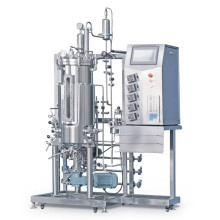
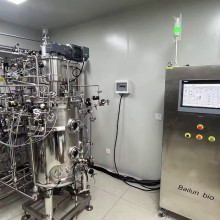
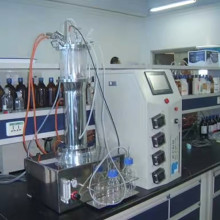
A stirred tank bioreactor is a tank that grows cells or microbes. A motor spins an impeller inside to mix the culture. Sensors check the temperature, pH, and dissolved oxygen, and the controls keep each one in range. Labs and plants use it for cell culture and fermentation. Living cells need food, the right heat, and steady mixing. A stirred tank bioreactor is built to give them all three in one tank. Bailun Biotech (Jiangsu) Co., Ltd. builds bioreactors. Its company history starts in 1998, and its first Lianyungang factory opened in 2008. A good design keeps mixing, oxygen, and heat in balance. A bioreactor is a tank where cells or microbes grow under set conditions. Temperature, pH, dissolved oxygen and mixing speed stay near their set values. This keeps each batch close to the last one. A fermenter mostly grows microorganisms to make metabolites or biomass. A bioreactor does more. It can be used for cell culture, tissue engineering and enzyme reactions. It also tends to have more advanced monitoring and control. Type Scale and controls Best fit The impeller is a set of blades on a shaft, and a motor turns the shaft. It turns at a fixed pace. Each process is set at that speed using a variable frequency drive, or equivalent equipment. The form of the tank, the speed of the impeller and its design help maintain nutrients, oxygen and cells equally divided. Baffles on the wall are used in several designs to interrupt whirling. There is also a seal where the shaft goes into the tank. The sparger and the aeration system add oxygen. The right method depends on what the cells or microbes need. Stirring then spreads that oxygen through the culture. Water or steam passes through the jacket to either heat or cool the tank. Some designs include coils within the tank. Sensors monitor the temperature, since even a little variation might effect cell development. Durable, rust-proof, and easy to clean and disinfect, stainless steel is a great material to choose. Doing so will maintain a clean tank. Along the way, sensors detect changes in temperature, pH, and the amount of dissolved oxygen in the water. A stirred vessel works by spinning one impeller to mix the culture, while sensors guide each change. A normal run has five steps. Clean and sanitize the tank. Methods include steam in situ, chemical sterilizing and autoclaving. Add the sterile media and starting culture. Apply aseptic method. Mix and aerate. The impeller stirs the culture, while the sparger injects oxygen. Maintain normal readings. The jacket controls heat. Sensors detect the pH, and automatic controllers administer acid or base as required. Harvest via centrifugation, filtering, or extraction. The tank needs cleaning for the next batch. You can adjust dissolved oxygen with the aeration rate or the agitation speed. Working volume is the amount of liquid culture the tank holds during a run. Bailun lists a working volume range from 0.1 L to 1000 KL. Category Working volume range Scale-up means checking mixing, mass transfer and heat transfer again. Pilot runs help prove the change. The stirred vessel works for both cell culture and fermentation. Bailun lists four fields on its home page: cell therapy, biopharmaceutical, biological enzyme preparation and vaccine. Mammalian cells, such as Chinese hamster ovary (CHO) cells, which make proteins Stem cells, used in regenerative medicine Microbial cells, such as bacteria and yeast Three common culture modes exist. Batch provides nutrients at the beginning. Fed-batch adds them little by bit. Continuous mode: The addition of new medium is balanced with the removal of used medium and cells. The design is also able to perform aerobic or anaerobic fermentation by controlling the agitation speed and oxygen supply. Every design has trade-offs. A stirred vessel has six. Shear stress: Moving liquid can damage fragile cells. Sterility: The vessel must stay clean to avoid contamination. Foam and heat: You need to manage both. Scale-up: Settings need to be tuned again at each new size. Wear: The motor, bearings and impeller need regular checks. Size and controls: The vessel is bigger and more complex than a mini bioreactor. If the cells are very sensitive to shear, an airlift bioreactor is gentler. The right bioreactor on four things: the process, the cells or microbes, the scale and the control you need. Settle these before you ask for a quote. A clear list saves time later. Check What to ask A stirred vessel fits many of these cases because it mixes well and spreads oxygen evenly. An airlift design fits gentle culture. A mini bioreactor fits early tests. The most common problems are poor mixing, low dissolved oxygen, contamination and sensor faults. Each one has a clear first check. Poor mixing: Check the speed of the impeller and the agitator. Low dissolved oxygen: Check the aeration system and agitation speed. Contamination: Verify sterilization procedures and sample routine. Sensor faults : Verify sensor connections and calibration. Rising temperature: Examine the operation of the cooling system. Sampling is also tricky. Use sterile sampling ports, sample quickly, and restabilize the port immediately. If an issue continues recurring, contact the maker's technical assistance. Between runs, clean, rinse, and inspect each part. First, dispose of the rest of the culture. Then wash the tank and its parts with a suitable detergent and disinfectant and rinse well. Check any worn parts and replace them. Calibrate the sensor. Inspect the motor, bearings, and impeller for wear and lubricate the working parts. Also adjust the speed control. Safety is also important. Ground all electrical components. Wear gloves, goggles, and a lab coat. Be sure there is an emergency shut-off and train all operators on how to utilize it. There are five steps in a custom project: preliminary discussion, foundation design, detailed design, manufacture and installation, and delivery of the project. Bailun offers these processes on its custom services site . Bailun initially requests clients to provide a URS or comparable process description. Then the team develops the process flow diagram (PFD) from that document. Later processes include assembly test, test report, on-site installation, operator training, and GMP verification assistance. Bailun Biotech (Jiangsu) says it is a manufacturer. It focuses on the biopharmaceutical and bioengineering industries. Factory size : four locations of 5,000 m2 (Haizhou District, Lianyungang), 56,000 m2 (Ganyu District, Lianyungang), 2,600 m2 (Jiading District, Shanghai) and 12,000 m2 (Songjiang District, Shanghai), with 500 employees Certification: ASME U Stamp & ISO 9001 Delivery time: lab equipment requires 2-3 months, pilot equipment 3-4 months, and industrial equipment 4-12 months Warranty: 2 years on hardware and software. Wear and tear damage to parts and accessories is not included Services : custom builds, from user requirement specification (URS) and design to manufacturing, factory and site acceptance testing (FAT and SAT), and training. It also has GMP validation and a cell culture R&D facility Terms: MOQ 1 Unit. OEM is welcome, and we can provide foreign installation as well Ask Bailun about size, delivery, or customization through its contact page . The impeller rotates, stirring the culture. Oxygen is supplied by the sparger, and the jacket maintains a constant temperature. Sensors monitor the pH and dissolved oxygen, and the controls adjust it if a measurement is off target. The essential sections are: the tank, the impeller and motor, the sparger, the jacket, the sensors, and the control system. Also, in many designs, baffles are added to the wall and a seal to the shaft. The primary drawbacks are shear stress, strict sterility requirements, foam, and heat. Scale-up work and maintenance of the moving parts. A small bioreactor is simpler, and an airlift is kinder to delicate cells. Acid or base is applied to adjust the pH. Sensors read the pH, and the system adds the proper quantity to bring it back to the specified value. You can scale from lab to plant, yes. But you need to reexamine mixing, mass transfer, and heat transfer at the greater scale. The pilot runs verify the change. Start by cleaning the tank. Then, sanitize it by autoclaving, chemical sterilization, or steam-in-place. Use aseptic procedure for taking samples and adding culture. A stirred vessel has an impeller for mixing, a sparger to supply oxygen, and a jacket to control the heat. And it has its limits: shear tension, sterility, foam, and scale-up work. Contact us via the contact page and email your URS and target working volume to Bailun Biotech (Jiangsu) Co., Ltd. to identify the design that fits your process.Stirred Tank Bioreactor Basics in Plain Terms
Stirred Tank, Mini and Airlift Compared
The Core Parts Inside a Stirred Vessel
Impeller and Motor
Baffles and Mechanical Seal
Sparger and Aeration
Jacket and Temperature Control
Stainless Steel Vessels and Sensors
From Impeller Spin to Oxygen Supply
Five Steps in a Normal Run
Working Volume Choices From Lab to Plant
Bailun Category Ranges
Where Cell Culture and Fermentation Fit
Cell Types It Can Grow
Limits Worth Knowing Before You Choose
Six Limits to Planning For
How to Pick the Right Bioreactor for Your Process
Four Checks Before You Buy
What Goes Wrong in a Bioreactor Run?
Where to Look First
How Do You Care for the Vessel Between Runs?
How Does a Custom Project Move From Request to Delivery?
Choosing a Supplier With Proven Credentials
Credentials at a Glance
FAQs
How does a stirred tank bioreactor work?
What are the parts of a stirred tank bioreactor?
What are the disadvantages of stirred tank bioreactors?
How is pH controlled in a bioreactor?
Can a bioreactor be scaled up from lab to plant?
Conclusion