
What Are the Main Parts of a Fermenter? Vessel, Impeller, Probes?
A fermenter is a closed, sterile tank. It controls mixing, air, heat and pH. This helps microbes or cells grow and make a product. The main parts of a fermenter are the vessel, jacket, agitator, impeller, sparger, baffles, probes, valves, exhaust and control system. Each part has one job. Lab teams use stainless steel lab fermenters every day. They need to know the parts of a fermenter well. A fermenter has ten main parts. Each part has only one job. Some parts hold the broth and mix it. Others add air, check pH and oxygen, take samples or run the controls. All of them work as one team. Part Main job The vessel is a closed tank. It holds the broth. A jacket wraps around it to heat or cool the liquid. The lid seals the top and holds the ports for probes and valves. Bailun makes its jacketed tank from SS316 and SS304. The inside is polished to 0.4 to 0.6 µm. A smooth surface is easy to clean and sterilize. Less dirt can hide on it. The tank design pressure is 0.3 MPa. The jacket design pressure is 0.35 MPa. The diameter to height ratio is 1:2.2 to 2.5. The working volume is 30% to 70% of the total volume. The rest is headspace. This is empty space for foam and gas. Units from 30L to 500L have a lid lift system. Temperature control is automatic. It uses electric heating. The range is from the water source temperature plus 5°C up to 70°C. The agitator is a motor and a shaft. Together, they turn the impeller. The impeller keeps cells floating in the broth. It spreads nutrients through the liquid. It also breaks air bubbles into smaller ones. Bailun is available with a mechanical drive at the top or bottom. It also has a magnetic drive on the top. Each device includes 3 six-blade paddles. Height adjustable. The stirring speed is 50 to 1000 rpm / 50 to 400 rpm DO control is related to the stirring. Thus, a decrease in oxygen may lead to an increase in stir speed. The sparger introduces sterile air or gas into the soup in bubble form. It sits low in the tank, under the impeller. The impeller fractures and disperses the bubbles. Porous sparger: a solid piece with tiny holes. It makes very fine bubbles. Orifice sparger: a ring pipe with small holes. Nozzle sparger: a single open or half-closed pipe. Bailun uses a rotameter to control gas flow. Air flow is 1 vvm. Vvm means gas volume for each liquid volume per minute. O2, N2 and CO2 gas control is an optional extra. Baffles are metal strips mounted on the interior wall of the tank. They do not let the liquid move as one piece. This stops the vortex. And it also assists in oxygen transmission and mixing. Each strip is normally roughly a tenth of the tank's width. There are no baffles, the liquid just swirls around the shaft. Mixing becomes ugly. Sensors tell the control system what is going on in the broth. Each sensor sends a reading. The control loops act on it. The pH probe measures the acidity of the broth. Bailun indicates a pH range of 2.00 to 12.00. A peristaltic pump mixes acid or base automatically. The sensor is from Hamilton/Mettler, Switzerland. Accuracy is not the same for each Bailun model. Ask for the figure for the model you're going to purchase. The DO probe measures dissolved oxygen. This is the oxygen free in the liquid for cells to use. Bailun lists a range of 0 to 150%, ±3%, with a display precision of 0.1%. This sensor also comes from Hamilton/Mettler, Switzerland. It can be linked to the stirring and the oxygen supply. Pressure control is automatic. It uses a BD (Germany) pressure transmitter or a Lambert differential pressure liquid level gauge. A peristaltic pump adds antifoam on its own. Optional sensors cover level, OD, turbidity, ORP, weight and live cells. The sampling valve lets you take a sample without opening the tank. Bailun's valve works by hand. You can sterilize it on its own. No outside microbes can get in, so the batch stays clean. The bottom harvest valve is a zero dead zone valve (GEMÜ/Bürkert, Germany). This means no spot where liquid can get stuck. You can sterilize it on its own too. It works by hand or automatically. Inoculation means adding the starter culture. It goes in through a 4-valve group or a pin-in port with flame protection. Feeding is automatic. A peristaltic pump does it. There is a condenser before the exhaust. It reduces liquid loss in the off-gas. A diaphragm or proportional control valve regulates it. SIP stands for “sterilize in place.” It is self-operating via software. CIP stands for clean in place. It has a spray ball. The system is controlled by a Siemens PLC with a 10-inch touch screen. It regulates stirring, pH, DO, temperature, feeding, and gas. It also records, analyzes, produces, and publishes data. It features overflow alerts and language switching. A bioreactor is a sort of fermentor. It is mostly utilized for microbes such as bacteria, yeast, and fungi. The broader term is bioreactor. It also contains cultures of animal and plant cell types. In everyday lab parlance, many teams refer to the same stirred tank by both terms. They both fit the pieces of a fermentor in this article. The parts of a fermenter work in a set order in each run. SIP sterilizes the tank, lines and valves. The growth medium goes in. The team adds the culture through the inoculation valve group. The sparger adds air. The impeller mixes the broth, and the baffles stop the vortex. The pH, DO and temperature loops run on the PLC. The team takes samples through the sampling valve. The harvest comes out through the bottom valve. Then CIP cleans the system. Bioengineering and biopharmaceuticals are Bailun's primary areas of expertise. Developing, designing, manufacturing, and testing hygienic containers and modular processing equipment are all part of its job description. Its bioreactors and fermenters come in sizes from 0.1L to 1000KL. Factory scale in Lianyungang: 56,000 m² in Ganyu and 5,000 m² in Haizhou. Factory scale in Shanghai: 12,000 m² in Songjiang and 2,600 m² in Jiading. Staff: 500. Certification: ASME U Stamp, NBBI, PED and ISO 9001 . Delivery time: lab equipment takes 2 to 3 months, pilot equipment 3 to 4 months and industrial equipment 4 to 12 months. Bailun lists the full specs on its Lab fermenter (SS316, 5L-50L) page. The parts of a fermenter are the vessel, jacket, agitator, impeller, sparger, baffles, pH and DO probes, sampling valve, exhaust and control system. The vessel holds the broth. The impeller mixes it. The probes check it. The sparger adds air. The sampling valve keeps the batch clean. A sparger adds sterile air or gas to the broth as bubbles. This gives oxygen cells. The impeller then spreads the bubbles through the liquid. Porous, orifice and nozzle are the three classic types. Bailun uses a rotameter for gas flow. Air flow is 1 vvm. An impeller mixes the broth and keeps cells floating. It also breaks air bubbles into smaller ones. It helps heat and oxygen spread evenly. Bailun fits 3 six-blade paddles with adjustable height. Stir speed is listed as 50 to 1000 rpm / 50 to 400 rpm. Baffles stop the liquid from spinning as one block. This stops a vortex and helps mixing. They are fixed to the inside wall. Each one is often about one tenth as wide as the tank. Both probes give the control system the data it needs. The pH probe guides acid or base dosing. The DO probe guides stirring and oxygen supply. Bailun lists a pH range of 2.00 to 12.00. Bailun lists a DO range of 0 to 150%. SIP means sterilize in place. CIP means clean in place. SIP sterilizes the tank and lines before a run. CIP cleans the system after harvest. Bailun's SIP runs on its own by program. Bailun's CIP uses a spray ball. Each of the parts of a fermenter does one job, and the control system ties them together. The vessel holds the broth. The impeller and sparger feed it. The probes watch it. When you compare lab units, check the vessel grade, drive type, sensor brands and sterilizing method. Bailun Biotech (Jiangsu) Co., Ltd. lists these details for its stainless steel lab fermenters. Ask for exact figures for your model. You can view the lab fermenter range or send an inquiry . The Core Parts of a Fermenter at a Glance
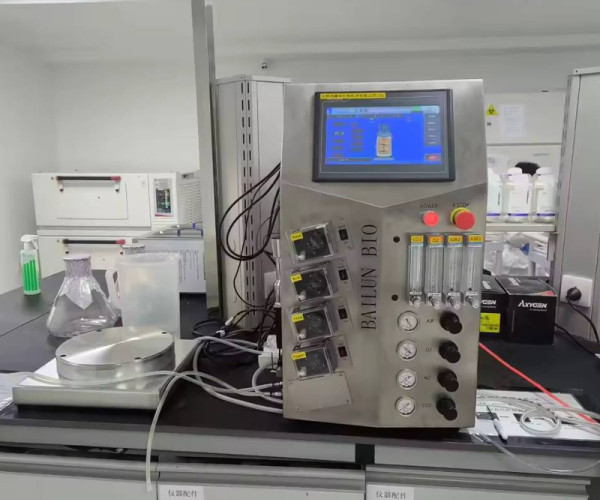
Fermenter Parts and Their Main Jobs
The Fermenter Vessel: Body, Jacket and Lid
Stainless Steel Grades and Surface Polish
Jacket, Design Pressure and Tank Shape
How the Agitator and Impeller Mix the Broth
Top, Bottom and Magnetic Drive Options
Six-Blade Paddles and Stirring Speed
Sparger and Air Supply: Feeding Oxygen In
Three Classic Sparger Types
Baffles: Small Strips That Stop the Vortex
pH Probe, DO Probe and Other Process Sensors
How the pH Probe Holds the Culture Steady
What the DO Probe Tells You About Oxygen
Temperature, Pressure, Foam and Level Checks
Sampling Valve, Harvest Valve and Ports
Exhaust, SIP, CIP and the Control System
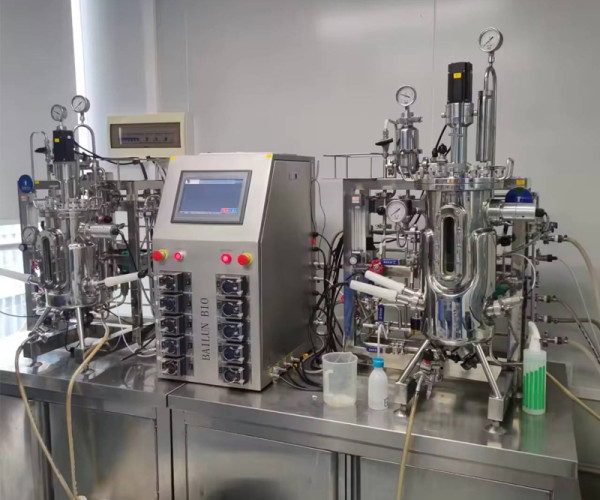
Fermenter or Bioreactor: Is There a Difference?
How Every Part Works Together in One Run
Steps in a Typical Run
Choosing a Lab Fermenter Built for Research
Factory Scale, Certification and Delivery
FAQs
What are the parts of a fermenter and their functions?
What is the function of a sparger?
What does an impeller do in a fermenter?
What do baffles do in a fermenter?
Why does a fermenter need a pH probe and a DO probe?
What is the difference between SIP and CIP?
Conclusion