
Is an Automatic Fermenter Worth It for Probiotics? strain, viable and count
Are you guessing or can your fermentation line maintain probiotic cells at scale? 7 years in the probiotic industry and I've seen the millions of living cells killed before shipping due to poor setup. I will discuss the effects of automatic fermenter on the strain quality, viable cell count and batch results.
Discover automated fermenters. Notice how it protects live germs. I will talk about the best scale, how to choose a Chinese supplier, and why Bailun Biotech (Jiangsu) is a great choice for your next purchase.
What Is an Automatic Fermenter and Why Does It Matter?
So we have an automated fermenter that controls temperature, pH, oxygen and mixing automatically. It is important for probiotics. Live bacteria are fragile. A small change in temperature or pH can kill billions of cells. Sensors, software, and automatic fermenters are self- stabilizing .It protects bacteria all the way through. Automatic fermentation monitoring logs data live. Markets are regulated batch by batch records. It decreases the chance of human error and contamination.
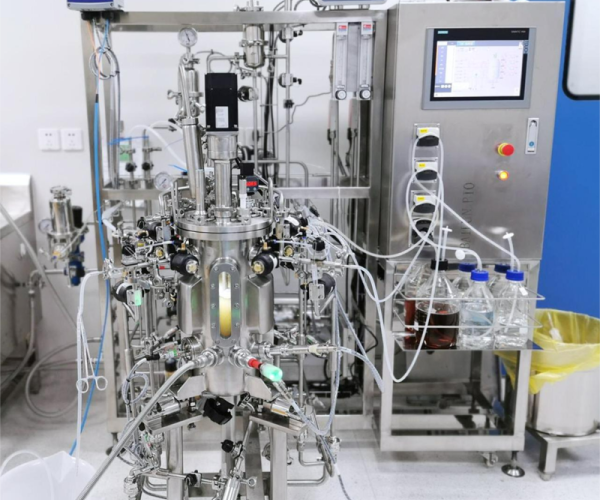
Core Parameters and Their Effect on Probiotic Cell Health
Parameter | Best Range | What Happens if Wrong | How It Is Controlled |
|---|---|---|---|
How Does Automatic Fermentation Protect Probiotic Strain Integrity?
Every great probiotic is based on strain integrity. If the bacteria weaken or change during fermentation, the batch is discarded. Automated fermentation keeps up growth conditions for hours or days. Sensors check data every few seconds to make corrections. Manual systems make this impossible. Strain-specific parameters are stored in automated systems Different regimens for Lactobacillus and Bifidobacterium can be run in the same facility.
How Strain Protocols Work in Automated Systems
Every probiotic strain has its own environment that it does well in. Modern automated fermenter controllers have several strain profiles in the software. Operator (strain) select. System automatically loads whole application. It reduces the chance of manual errors. It also enables facilities to exchange strains without manually testing parameters.
Key Benefits of Automated Strain Protection
Sensors self-correct pH changes within seconds.
“Closed systems with auto-clean cycles do not require any manual interaction.”
All readings are recorded for batch records and audits.
Multi-strain agility. Stored profiles speed up species change.
Manual vs. Automatic Fermentation: Head-to-Head Comparison
Criteria | Manual Fermentation | Automatic Fermentation |
|---|---|---|
Manual systems dependent on the operator. Results vary widely. The automatic fermentation creates consistent and auditable batches. This is required by food, pharma and supplement brands to adhere to GMPs. Automation is worth it just for the consistency gap.
Pros
Strict control, nearly zero batch failure.
Stores strain specific programs for quick switching.
Digital logs that regulators can inspect.
Closed loop architecture lowers pollution.
Cons
More costly than manual tanks upfront.
Training of staff to run and maintain software must be undertaken.
Needs regular sensor calibration and software updates.
What Scale and Tank Size Gives the Best Viable Cell Count?
The most important number on probiotic labels is the CFU per gram of living cells. Getting the size of the tank wrong is one of the most expensive production mistakes. Not enough to meet demand. Poor and large mixing reduces CFUs. Automatic fermenters for sale range from 5-litre lab systems to 50,000-litre industrial systems. Ideal size is determined by target CFU, output volume, and drying technique.
Production Scale and What Each Level Delivers
Test and screen strains in 5-50 L lab fermenters. 50–500 L pilot units act as a link between R&D and manufacturing. Contract manufacturers and large brands are in the 500 to 50,000 L industrial range. Each scale requires a different mixing to minimize shear damage which kills cells and reduces CFU. Unmanaged high shear in large tanks can reduce viable numbers by 20–40%.
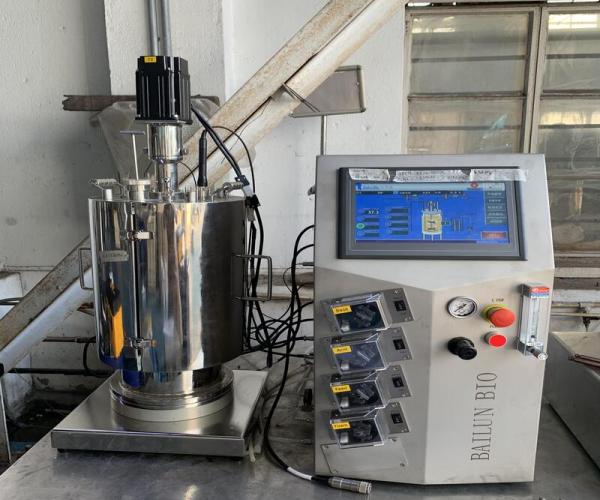
Fermenter Scale vs. Expected CFU Output Per Batch
Scale | Volume | CFU/mL Output | Best Use Case |
|---|---|---|---|
Sectors That Use High-CFU Probiotic Fermenters
Capsules and powders need 1-50 billion CFU per serving.
Infant Nutrition – CFU Stability is stringently monitored through shelf life.
Functional foods - yoghurts and drinks - require live cultures at the checkout.
Wholesale automatic fermenter is needed for animal feed in large volumes.
Tank Design Comparison for Maximum CFU Output
Tank Type | Mixing Method | Shear Risk | Best For |
|---|---|---|---|
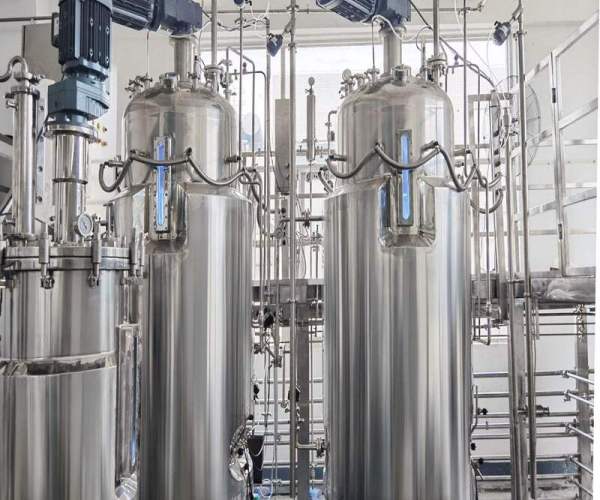
Stirred tanks are the most popular due to their versatility and size. Airlift and bubble column configurations work well for shear sensitive stresses. The right tank and automatic fermentation monitoring will increase the fastest cell production.
Advantages
Cost for low CFU at high quantities.
Continuous industrial cycles are possible.
Popular brand requests fulfilled.
Disadvantages
If the scaling is wrong it will generate oxygen gradients that will kill cells unevenly.
Big tanks are a waste of money and room.
Mixing dead zones reduces yield.
How Do You Pick the Right Automatic Fermenter Manufacturer in China?
China is the largest producer of industrial fermentation equipment. The best Chinese automatic fermenter factory has GMP standard design, validated control systems and after sale service. Not all vendors are alike. Some low cost but poor weld quality or pH unfriendly control software. Consider more than just the price when choosing an automatic-fermenter manufacturer. Check the material quality, validation documentation, PLC brand, sensor accuracy and the factory's fermentation expertise.
Key Things to Check When Choosing a Chinese Supplier
Look for ISO 9001 certification – the basic quality standard. Secondly check the tank is 316L stainless. Third, ask about PLC brands. Siemens and Mitsubishi are good brands. Fourth, get a FAT report. Fifth, ask for after-sales service. A reputable Chinese automatic fermenter supplier provides remote support, on-site installation and staff training.
 Link text
Practical Tips Before You Order
Go and see or get a live video audit before ordering in bulk from an automatic fermenter factory.
FAT reports confirm that the tank meets your specs before shipping.
Check the warranty – good automatic fermenter wholesale vendors provide 12 – 18 months.
Ask about on-site service. Engineers can come to your nation when you need them.
Advantages
30-50% cheaper than European brands.
Short lead times (8-14 weeks for standard models).
Fully bespoke design for any size.
Disadvantages
Quality control standards differ widely among manufacturers.
Some Vendors don't have GMP audit documents.
Post-sale support depends on the vendor.
Frequently Asked Questions
How much CFU can you guarantee your automated fermenter produces?
Most commercial strains can produce 10 10 to 10 11 CFU/mL in a good automated fermenter. Count is determined by strain, growth media, and run length.
lactobacillus strains reach 10^10 CFU/mL in 12-18 hours.
Bifidobacterium strains require strict control against oxygen to count alike.
In continuous culture, high density bioreactors can reach 10 12 CFU/mL.
Can you have multiple probiotic strains in one fermenter?
Yes. The systems today have multiple strain programs. It's not long to change over. Automatic cleaning cycles prevent cross contamination from one run to the next.
2. Program change 1-2 hours including cleaning.
Separate tanks are recommended under strict GMP conditions.
There are groups in some factories with several tanks all controlled by one system.
Does automatic fermentation monitoring contribute to extending shelf life?
Better drying cells are well-controlled fermenters. This makes them resistant to freeze-drying, and shelf-stable.
Harvesting at a constant rate preserves cell membranes.
Lipid damage is reduced under low oxygen stress.
Increasing the cell quality increases the freeze-drying survival by 20-30%.
How long does a Chinese automatic fermenter need?
Standard tanks ship 8-14 weeks after order is confirmed. Custom devices are designed to order. 16-20 weeks depending on complexity of specs.
Sometimes semi-stock pilot scale units (50-200 L) are faster.
Large industrial tanks always require custom fabrication.
Air freight surcharge for fast small tank orders.
Fed batch is worse than automatic fermentation.
Where to find a good automatic fermenter wholesaler?
Choose 3-5 vendors. Full technical quotations. Inspect factories in person or via video. Before ordering full production, try a small tank.
China is a great place to meet certified manufacturers.
The most credible referrals come from established probiotic contract manufacturers.
First, find certified gold suppliers on B2B platforms.
Conclusion
Automatic Fermenter separates a working product from one that is just good on label. Probiotic product value is preserved through real-time pH control, strain-specific protocols, and data logging. Less failed batches, more regulation, and consistent results make the investment pay quickly for itself.
Bailun Biotech (Jiangsu) can help you find the right equipment. Bailun has proven results for pilot units and industrial systems. Team up with Bailun Biotech to base your production on science and probiotic viability.