
How Microbial Fermentation Commercial Bioreactors Handle Cell Density? Oxygen, Cooling, Agitation
Any fermenter operator knows this problem. The higher the cell density the more difficult it gets. The oxygen travels slower. The heat begins quickly. Mixing is tough too. A microbial fermentation commercial bioreactor must solve all the three problems at the same time. And it will need to do it without damaging the cells inside. This article how that works. We describe why high cell density is problematic for fermentation. We describe the design of the oxygen flow and of the cooling demonstrates to cope. We also show what makes a commercial system different from the small bench top unit most people learn on first. A microbial fermentation commercial bioreactor is a vessel designed to grow bacteria or other microorganisms. It maintains temperature, pH, oxygen and mixing control. The terms fermenter and bioreactor are often used interchangeably. Some engineers use 'fermenter' solely for the microbes, and 'bioreactor' for a wider class that includes animal cell culture. In day to day usage, a biological fermenter and a bioreactor are the same tool. Feature Simple Job The four main sizes of bioreactor types are: Each size corresponds to a different stage of work. A laboratory fermenter or bench top bioreactor generally contains 1 to 10 liters. It is used to test strains, and to plan early steps. A bench scale bioreactor is 10-50 liters. This is where the process begins to take real shape. Lab scale (1–10 L): select top strain, evaluate growth media Bench scale (10–50 L): design early process Pilot scale (50-2,000 L) : test the plan on a bigger scale Commercial scale (2,000 L and up): (2,000 L and up) The top of that list is examined in this article. The oxygen, heat and mixing in there are very different compared to a small lab fermenter. At high cell densities the fermenter behaves differently. This is not merely a larger number on a chart. More cells filling the same space require more oxygen. They also generate more heat. The soup gets thick and hard to stir. And each problem makes the others worse. Poor mixing impairs oxygen delivery. Low oxygen can push cells to generate even more heat. That is why this article has three systems. Oxygen system, cooling system and mixing. All three are designed to operate as a single team in a good microbial fermentation commercial bioreactor. Commercial bioreactors control the oxygen by increasing the oxygen transfer rate, OTR. This must be equal to the oxygen uptake rate, called OUR. The OTR is the rate of oxygen diffusion into the broth. OUR is the rate of cellular uptake. Some commercial designs bridge the gap with a few steps combined: Finer sparging - Smaller bubbles have more surface for oxygen to dissolve into Oxygen-enriched gas - adding pure oxygen to the air increases the pressure to dissolve Higher tank pressure - the more pressure the faster the oxygen dissolves Better impeller design - some blade shapes break bubbles smaller, but don't damage cells Together, these steps allow a commercial bacterial fermenter to supply a dense culture with the oxygen it needs. A smaller tank would run out of oxygen in a matter of minutes without them. Heat is removed from the tank by a jacket, coils in the tank, or an external heat exchanger. Large systems tend to use more than one at a time. As the cells grow they produce lots of heat, especially in dense cultures. That heat has nowhere to go on its own in a sealed steel tank. If it builds up, it pushes the broth past the optimum temperature for the cells. This inhibits growth, or even kills the culture. A jacketed tank is circulated with cold water or glycol around the outer wall. This works well in small tanks. As a tank becomes wider, its wall has less wall area per unit volume. Wall cooling alone cannot keep pace anymore. So big systems have coils inside. Often the biggest densest runs have an external heat exchanger. Commercial scale mixing has to do two things at the same time. It should spread oxygen and food well. Furthermore, it should not damage the cells. There is a real trade-off here, faster mixing gives better oxygen distribution but too much force can break cell walls, especially for the thinner strains. Big tanks often have several impellers on a single shaft instead of one big blade. The usual configuration is an upper blade that pulls broth up and down and a lower blade that pushes broth outward. That layered design keeps the whole tank moving. It prevents dead spots from forming at the top or bottom. The main difference between a microbial fermentation commercial bioreactor and a bench top bioreactor are the control and backup systems, and the size of the batches. The real change is not only size. Scaling up isn't just about building a bigger tank. The whole control approach also changes. Feature Bench Top Bioreactor Commercial Bioreactor So you can have a process that works fine in a lab fermenter but falls apart the first time you try to scale it up. Not only the size, the whole sort of equipment has changed. The bioreactor for mammalian cell culture is designed to protect delicate, fragile cells. It downplays hard pushing of oxygen. Animal cell lines grow more slowly. They need to be mixed more softly. They rarely attain the density we are dealing with here. Microbial cultures are more robust. They can deal with a lot of oxygen flow and hard mixing with far less risk of damage. This is important when you shop for equipment. A tank for the gentle culture of animal cells would probably not be suitable as a microbial fermenter. The reverse is also true: a rough, high shear microbial design can be too harsh for animal cells. Thinking of buying a microbial fermentation commercial bioreactor? Here are 5 things to consider before you compare prices. Your actual production goal has to be the working volume, not just your small test batch. Oxygen transfer should be delivered as a concrete OTR number not a fuzzy claim. You size your cooling capacity to the heat your strain produces at full density, not just at the start. Anticipated working volume and fill range Oxygen transfer rate (OTR) at the cell density you desire Cooling capacity (jacket, coil or outside exchanger) Sensor/Automation/Data Logging Depth of Control Sterilization method (built-in steam or autoclave) Biotech fermenters sound good on paper. If any of these five specs were designed for a smaller job than the one you actually run, it can still fail. Many teams scale up by simply increasing the size of the tank. They assume everything else will scale similarly. It does not. The oxygen flow, the heat removal and the mixing all scale differently as the tank gets bigger. That's why problems that never arose at the bench scale suddenly arise at 2,000 liters. Still assumes impeller speed from bench scale works at commercial scale Heat looks small at bench scale, so underestimate cooling requirements Not testing oxygen after building the tank Treating built-in steam sterilisation as the same as autoclave sterilisation A microbial fermenter is a tank designed to grow bacteria or other small organisms. Temperature, pH, oxygen and mixing are controlled. They vary from a small laboratory fermenter for early testing, to large tanks for full production. At all sizes, the main job is the same: Keep things stable so the culture grows well. The main types of bioreactors are lab-, bench-, pilot-, and commercial-scale. The difference is, the size. For the early stages, lab- and bench scale units are used, normally from 1 to 50 l. Test and run full production with pilot and commercial tanks, from about 50 liters to many thousands. Commercial bioreactors control oxygen by increasing the rate of transfer of oxygen. They do this with finer sparging, oxygen - rich gas, higher pressure, and improved impeller design. These steps work best in combination. No one step by itself can fill the gap between the oxygen supply and the requirements of a dense culture. It's not only the size, but the control and backup systems. Commercial systems have more sensors, automatic recipe control, safety alarms and even steam sterilizing built right into the tank. Most of these are normally bypassed in a bench top bioreactor. No, not with real changes, most of the time. Strong shear and hard mixing can be handled by microbial fermentation. Bioreactors for mammalian cell culture require softer mixing to protect soft cells. The cost will depend a lot on the size of the tank, the level of automation and what it's built from. There is not one common price for the whole industry. Buyers should be asking for a quote based on their real working volume, control needs and cooling needs, not just a list price. Oxygen, cooling, and mixing: grow together, not one at a time. That's the one idea to take away from this piece. A microbial fermentation commercial bioreactor based on only one of these three is going to hit a wall set by the other two. If you are looking at equipment against these needs, look at Bailun Biotech (Jiangsu). Their commercial fermenter line is built with robust sensors, robust cooling and impeller setups like the ones covered here. This makes them a good starting point if you're sourcing gear sized for real high density production, not just bench-scale guesses.What Is a Microbial Fermenter?
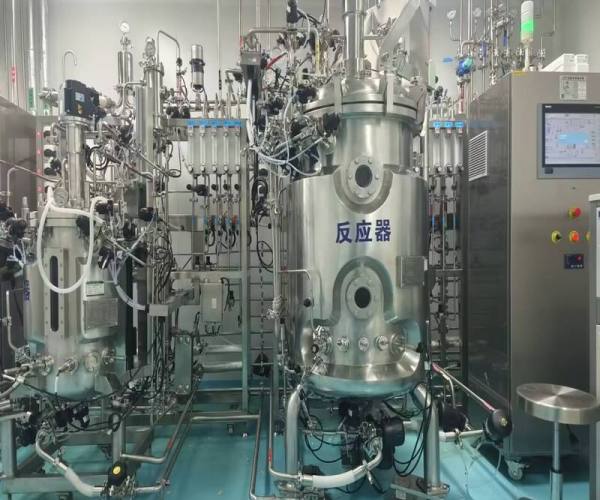
Bioreactor Types: From Lab to Commercial Scale
Why High Cell Density Changes Everything
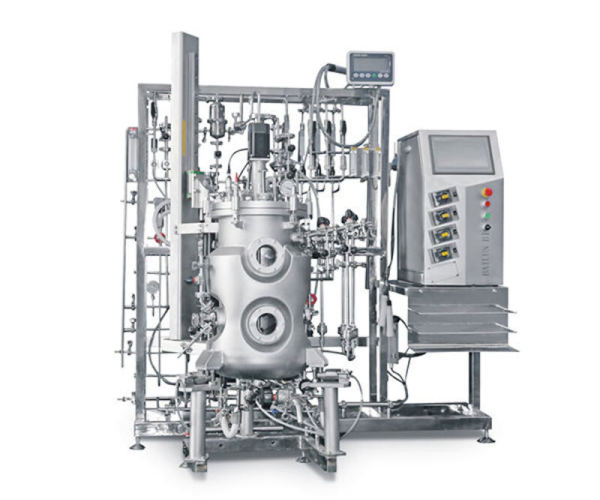
How Do Commercial Bioreactors Manage Oxygen at High Cell Density?
Cooling Systems: How Is Metabolic Heat Removed?
Agitation at Scale: Mixing Without Damaging Cells
Commercial vs. Bench Top Bioreactor: What Actually Changes?
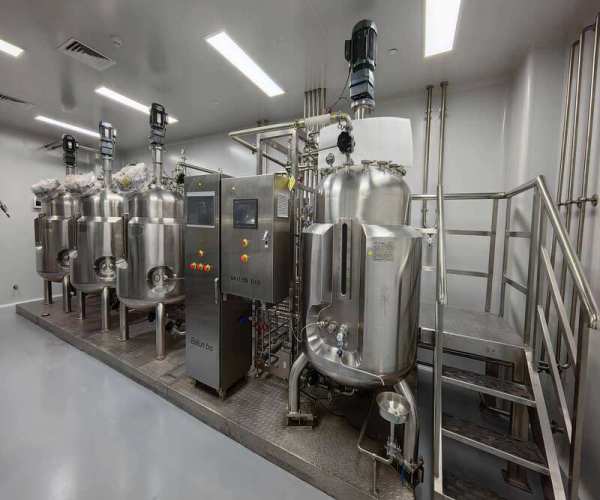
Bioreactors for Mammalian Cell Culture vs. Microbial Fermentation
What to Look for When Sourcing a Fermenter
Common Mistakes When Scaling Up Microbial Fermentation
Frequently Asked Questions
What is a microbial fermenter?
What are the types of bioreactors?
How do commercial bioreactors provide oxygen at high cell density?
What's the difference between a bench top and a commercial bioreactor?
Can the same bioreactor be used for microbial and mammalian cell culture?
What is the typical cost of a commercial fermenter?
Conclusion