
How Do You Size A Fermentation Tank Correctly? Working Volume, H/D Ratio, Fill
Have you ever put a batch of fermenting ingredients in the tank and it overflows or just doesn't meet expectations? I have been in the fermentation tank industry for over ten years and have seen first hand how such oversight can cost companies extra price.
This article will cover topics such as working volume, H/D ratio and fill levels to help you effectively size a tank. You'll also learn how to avoid common sizing mistakes, what kinds of tanks are best for certain operations, and why the right equipment partner is more important than you think.
What Is a Fermentation Tank and Why Does Sizing Matter?
Microbes convert raw materials into a final product. This happens in a controlled environment called a fermentation tank. These tanks are used in chemical, food and pharmaceutical industries. Stainless steel is the most popular material used to make tanks. This is because it is durable and easy to clean.
Tank size is closely related to a number of factors including product yield, fermentation rate and energy use. A tank that is too little wastes time and production. Tank size is too big, resulting in low yields and poor mixing. Getting the volume right is the cornerstone of an effective fermentation process. It also has an effect on your ROI and cost per batch.
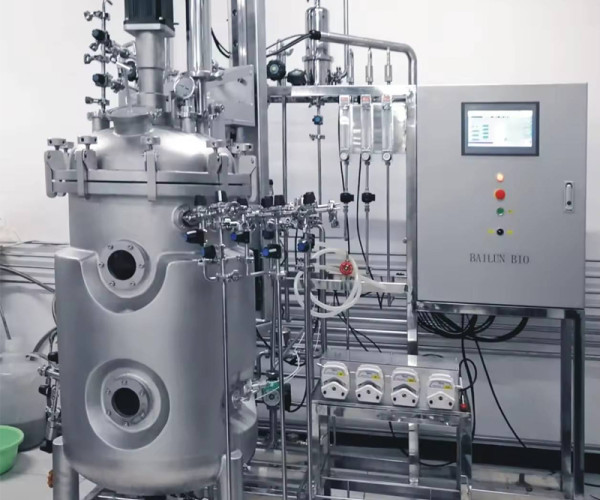
Parameter | Definition | Typical Range | Impact on Process |
|---|---|---|---|
How Does Working Volume Affect Your Fermentation Results?
Your fermenter has a “working capacity” which is the maximum amount of liquid it can contain during fermentation. That is not the volume of the whole tank Typically a tank is filled to sixty to eighty percent of its capacity. The rest of the space is for foam , for managing pressure , and for gas release. Fill it up to here and you risk overflow, contamination and substandard results. A stainless fermentation-tank that is 1000 liters may have only 700 or 800 liters usable. The design of a process should always be based on the working volume and not the overall capacity.
How to Calculate Working Volume Step by Step
The fill fraction is used to calculate the working volume from the total volume. Your fill fraction will usually be between 0.65 and 0.80, depending on your technique.
Tank Total Volume | Fill Fraction | Working Volume | Recommended For |
|---|---|---|---|
Key Factors That Change Your Working Volume
The type of microbe and their rate of foaming
Higher fill ratios are possible thanks to stainless steel fermenter tanks equipped with anti-foam systems.
Agitation speed and aeration rate directly influence foam height.
Temperature control devices influence liquid expansion during fermentation.
The fill levels depend on the viscosity of the fermentation broth.
What Is the H/D Ratio and How Do You Choose the Right One?
Your fermenter tank's H/D ratio is the ratio of height to diameter. This value sets the efficiency of mixing, aeration and heat transmission of your tank. A short broad tank has a high H/D ratio (as opposed to a tall narrow tank). Commonly used in commercial fermentation tanks for food and drink are ratios between 1:1 and 2:1. Pharmaceutical and biotech tanks can be set to a 3:1 ratio for better aeration. Bad oxygen transmission, uneven fermentation and dead zones due to the wrong H/D ratio. This has an impact on the ease of cleaning the tank and the size of the agitator.
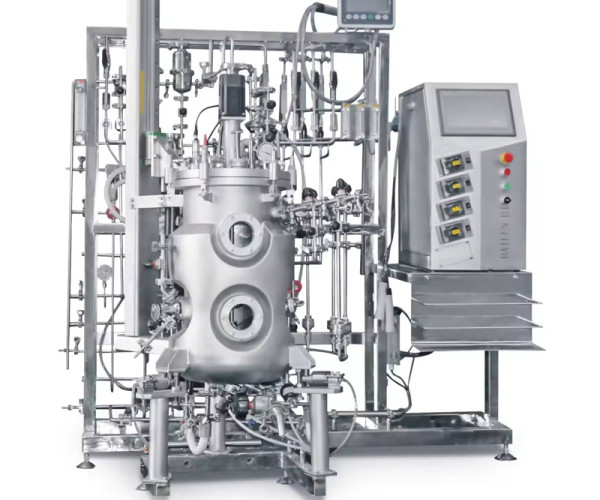
H/D Ratio Comparison Across Different Industries
Industry | Typical H/D Ratio | Advantages | Disadvantages |
|---|---|---|---|
The three most important factors in choosing the right H/D ratio are industry, product type and cleaning specifications. The lower the ratio the easier it is to manage but less efficient the aeration. The higher the ratio the better the gas transmission but the harder your operation.
Advantages and Disadvantages of High vs. Low H/D Ratios
High H/D (2:1 to 3:1): 2.1 to 3.3 high H/D ratio favors aerobic processes, better oxygen transport and reduced floor footprint.
High H/D Drawback: more resistant to cleaning, less efficient agitation and higher base pressure
Low H/D (1:1 to 1.5:1): Advantages of low H/D ratios (1:1 to 1.5:1) are easy installation, simple agitation and superior for viscous or solid containing medium.
Low H/D Drawback: Disadvantages include less output per m2, less efficient aeration and a larger floor area required due to low H/D.
How Does Fill Level Impact Fermentation Performance and Safety?
The fill height that is actually present in a fermenting tank during a batch is the fill level. It's a vital but often overlooked aspect of tank size. Overfilling can cause foam overflow, which could contaminate the batch and block vents. Too little fuel in the tank limits efficiency and wastes room. Industrial fermentation tank design has certain maximum fill designations. Never stray from the manufacturer's instructions. A general rule of thumb is to leave 20-35% headspace when fermenting. Correct fill level makes it easier and more effective to clean fermentation tanks after each batch brewed.
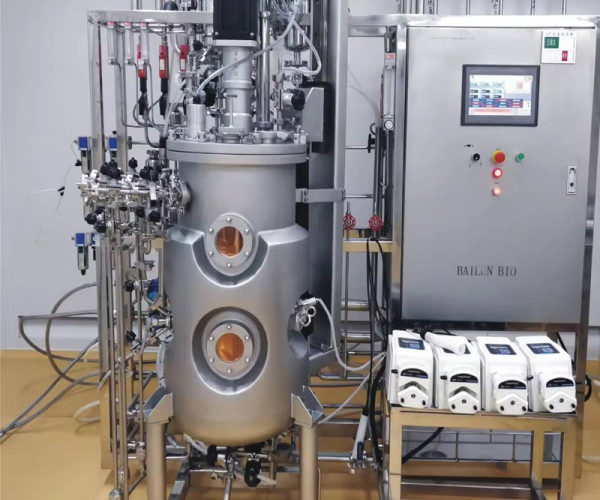
Fill Level Case Studies
Case Study | Tank Type | Fill Level Used | Outcome |
|---|---|---|---|
Best Practices for Setting the Right Fill Level
It is always a good idea to make a small batch before you start a commercial fermenter tank.
Use anti-foam chemicals or foam-level sensors to monitor the current foam level.
Use sight glasses on your stainless steel fermenting tank to see the fill level.
Record the quantities used for each product group and batch size.
Consider using cone-shaped tanks to improve separation of yeast and sediment at lower fill levels.
What Are the Most Common Tank Sizing Mistakes and How to Avoid Them?
There are a lot of people who buy fermentation tanks for sale and don't measure properly. The biggest mistake people make is to think that total volume equals working volume. There are some people who don't bother with H/D ratios when choosing a tank, they just look at floor space. Some go straight to a big industrial fermenter without any pilot testing. These errors lead to high energy consumption, expensive retrofits and low yields. A good rule of thumb is to size the tank according to the process requirements before considering any physical limitations. Consult a provider with expertise in fermenter tank design to avoid these costly mistakes.
Top 5 Sizing Mistakes and Their Fixes
Using total volume as working volume: You should never take the whole volume as the working volume you should always multiply the total volume by the fill fraction
Ignoring H/D ratio for your process: Make sure you buy the correct H/D ratio for your aeration and mixing needs.
Not accounting for foam: Always leave 20% headroom for producing fermentations This is a common mistake
Skipping scale-up testing: Don't go right to full scale without doing scale-up tests in smaller fermenter tanks.
Buying cheap tanks with poor welds: Don't buy cheap tanks with bad welds, but buy certified stainless steel tanks.
Frequently Asked Questions
What is the typical size of a fermentation tank?
The working volume is the amount of liquid that can be used in a fermenter tank while running. The actual volume of the tank is always less. You have to allow for headspace for gas, foam and pressure building. The usual operating capacity of a tank for fermentation is 65-80 percent.
Formula for working volume: total volume times fill fraction, often 0.65 to 0.80.
High-foam processes require more headspace and less working volume.
Batch sizes should be based on working volume, not total capacity.
What is the optimum H/D of a fermenter tank?
The optimal H/D ratio will vary depending on your industry and process. The ratio should be 1:1 to 1.5:1 for brewing. 2:1 to 3:1 ratio increases oxygen transmission for medicinal or aerobic fermentation. There is no perfect ratio. Consider the available floor space, your mixing needs and aeration requirements and then decide.
Alcoholic beverages and brewing 1 to 1.5:1
Industrial and food: 1.5:1 to 2.5:1
Biotech and pharmaceutical 2:1 - 3:1
What should I consider when deciding between a conical vs. cylindrical fermentation tank?
Conical tanks are preferred in yeast-based fermentations as the cone collects sediment and yeast at the bottom, which makes their disposal easier. If complete mixing throughout the tank is required, cylindrical tanks are the way to go. Conical tanks are the industry standard for storing craft beer and wine. Stainless steel cylindrical tanks are used more and more in industrial bioprocessing.
Conical tanks are the way to go for the best separation of yeast and visible product quality.
Cylindrical tanks are best suited for complete mixing in aerobic processes.
Both are available in stainless commercial grade fermenter tanks.
What is the best way to clean a stainless steel fermentation tank?
Proper cleaning is based on a CIP (clean-in-place) system. Most reputable manufacturers of stainless steel fermentation-tanks will include CIP spray balls as an option. Once rinsed in warm water, this is followed by a sanitising rinse and the application of an authorized cleaning product. Always stick to the standard cleaning routine. Tanks that are not cleaned properly might result in batch failures and contamination.
Make sure you're using the right size and shape of CIP spray balls for your tank.
Rinse, clean and sanitize. Confirm with ATP swabs or pH strips.
Plan for a thorough cleaning every 5 to 10 batches or more often if needed.
Where can I get the best fermentation-tanks?
Bioprocess equipment experts provide high-quality tanks. There must be after sale technical support, material certificates and CE certification. Find a producer that has worked on bespoke fermenter tank designs before, they will be able to advise you on optimal operating volume, H/D ratio and layout for your procedure.
Before you buy, look for the food-grade, CE or ISO seal of approval.
Ask us for a quote that's tailored to your working volume needs.
Ask about the options, warranty and expected delivery date of the CIP system.
Conclusion
There is more to picking the right size for your fermentation tank than it seems. It is the foundation of every good crop. Before you purchase or construct a tank, there are three critical numbers you need to be familiar with: working volume, H/D ratio and fill level. When these are properly set your process is more efficient, your yields are better and you spend less time cleaning.
Bailun Biotech (Jiangsu) is your trusted partner in the selection and construction of stainless steel fermenter tanks. They focus on bioprocess systems such as industrial fermenter tanks, conical tanks and other related products. With deep engineering expertise and commitment to quality, Bailun Biotech provides custom-built commercial tanks to meet your specific process needs and working volume requirements.